You're Playing It Wrong: The Ugly Gatekeeping Ruining British Gaming Streams
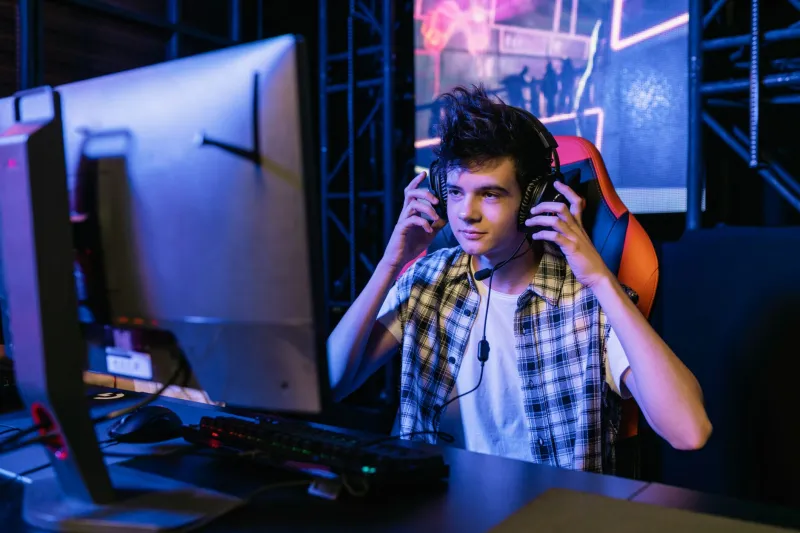
Somewhere right now, a British streamer is playing a cosy farming sim and having a genuinely lovely time. They're chatting with their community, tending their virtual crops, perhaps naming a chicken after their nan. And somewhere in that stream's chat, someone is typing the words "this isn't a real game" with the furious conviction of a person who has never, not once, questioned whether their opinion was invited.
Welcome to gaming's gatekeeping problem. It's not new. But it is getting worse, louder, and increasingly difficult to ignore — particularly for UK content creators who've built audiences around games that the self-appointed arbiters of gaming culture have decided don't count.
The Hierarchy Nobody Voted For
There exists, in the murkier corners of gaming discourse, an unofficial but fiercely enforced hierarchy of legitimacy. At the top: competitive shooters, brutally difficult action games, sprawling strategy titles. Anything that demands suffering, essentially. At the bottom: anything with pastel colours, a narrative focus, or — heaven forbid — a difficulty setting below 'punishing.'
The result is a strange cultural ecosystem where a streamer grinding through a soulslike at 3am is considered authentically gaming, but someone crying at the ending of a story-driven adventure is apparently just watching an interactive film and should probably go back to watching telly like a normal person.
It's nonsense, obviously. But it's nonsense with teeth.
What Happens to Streamers Who Stray
Take the experience of Priya, a 24-year-old streamer from Birmingham with around 12,000 Twitch followers, who built her channel on horror games before branching out into visual novels and life simulators. The response from a segment of her audience was, by her account, deeply unpleasant.
"The comments weren't just 'this isn't for me' — they were personal," she says. "I was told I wasn't a real gamer, that I'd 'gone soft,' that my channel was dead. Someone made a video about how I'd 'sold out.' I play games for a living. Literally. But apparently I'm doing it wrong."
This pattern repeats across the UK streaming scene with uncomfortable regularity. Male streamers who pivot to cosy games face accusations of chasing a female audience for financial gain. Female streamers who play casual titles are told they were never real gamers to begin with. It's a neat little trap where no one wins except the people doing the gatekeeping, who get to feel superior regardless of the outcome.
The 'Normie' Problem
Much of the hostility centres on what certain communities sneeringly call 'normie' games — titles with mainstream appeal, accessible mechanics, or the catastrophic crime of being enjoyed by people who don't consider themselves hardcore gamers. The implication being that gaming's value is somehow diminished when more people participate in it.
This is, to use a technical term, completely backwards. The expansion of gaming's audience has produced more diverse titles, more experimental storytelling, more creative risks. Games like Unpacking, Spiritfarer, and Disco Elysium — none of which involve shooting anything — have been critically celebrated precisely because gaming grew big enough to accommodate them.
The gatekeepers, bless them, see this as a threat rather than an achievement.
Why It Actually Matters
You might argue — and plenty of people do — that toxic chat is just part of streaming, that thick skin is the price of admission, that nobody's forcing anyone to read the comments. This is true, in the same way that it's technically true that nobody's forcing you to acknowledge a wasp in your kitchen. Ignoring the problem doesn't make it sting less.
The real damage is happening at the margins, among newer creators and viewers who encounter this hostility early and conclude, reasonably, that gaming spaces aren't for them. The UK has one of Europe's most diverse gaming populations — a fact that's worth protecting rather than squandering on purity tests about which games are sufficiently serious.
There's also a mental health dimension that's easy to overlook. Streaming is already an anxious, precarious profession. Layering on a constant drip of legitimacy challenges — you don't play the right games, you're not a real gamer, your audience doesn't count — is the kind of sustained low-level hostility that does genuine psychological damage over time.
The Counter-Culture Fighting Back
Fortunately, the picture isn't entirely bleak. A growing number of UK gaming communities have actively pushed back against gatekeeping culture, building spaces that celebrate breadth rather than depth of genre loyalty. Discords organised around cosy gaming, accessibility in games, and narrative-focused titles have flourished, often with explicit community rules against exactly the kind of elitism we're describing.
Content creators like Tom Scott, who approaches games with journalistic curiosity rather than competitive ego, and the growing cohort of UK streamers building audiences around variety and personality rather than genre specialism, are demonstrating that there's an enormous appetite for gaming content that doesn't come with a side of contempt.
The audience is there. The goodwill is there. The question is whether the loudest voices in the room will eventually exhaust themselves, or whether platforms will get serious about moderating the kind of sustained harassment that drives creators away.
A Simple Suggestion
If you encounter someone playing a game you wouldn't choose, here's a radical proposition: don't say anything. Or — and this is really going out on a limb — consider that their enjoyment of a different game costs you precisely nothing.
Gaming is, at its absolute core, about having a good time. The moment we start policing who's allowed to enjoy themselves, and in what manner, we've fundamentally missed the point.
The crops aren't going to harvest themselves. Let the streamer play.