Cracking the Code: How Britain's Puzzle-Mad Brain Became Gaming's Secret Superpower
Cracking the Code: How Britain's Puzzle-Mad Brain Became Gaming's Secret Superpower
There's a moment in almost every great British game where the designer does something unexpected. Not flashy. Not expensive. Just... clever. A mechanic that turns a limitation into a feature, a puzzle that makes you feel like an absolute genius for solving it, a narrative twist that recontextualises everything you thought you knew. It's the kind of thing that makes you put the controller down and say, out loud, to no one in particular: "Oh, that's brilliant."
It's not a coincidence. It never was.
The Hut Where It All Started
In the winter of 1941, a collection of mathematicians, crossword obsessives, chess champions and professional eccentrics were crammed into a series of wooden huts in rural Buckinghamshire, tasked with doing something that most of the world considered impossible. They were, essentially, playing the hardest game ever devised — one with actual lives on the line.
Bletchley Park doesn't get mentioned much in gaming history. It probably should. Because what Alan Turing and his colleagues built there wasn't just a codebreaking operation — it was a template for a particular kind of British thinking. Systematic but creative. Rule-bound but deeply irreverent. Obsessive in the very best sense of the word.
That template didn't dissolve when the war ended. It seeped into the culture, turned up in university mathematics departments, filtered through to a generation of teenagers who discovered, in the late 1970s, that you could make a computer do almost anything if you were stubborn enough and clever enough to figure out how.
The Bedroom Revolution Nobody Planned
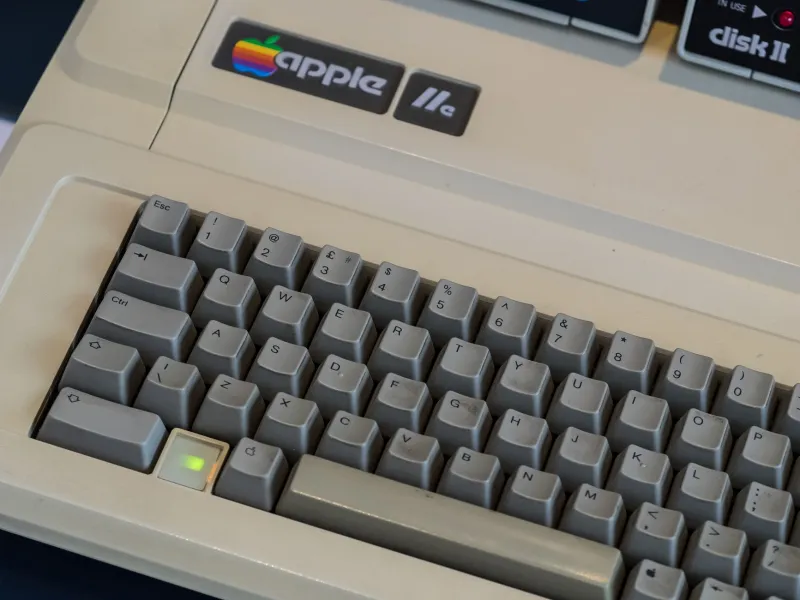
The Sinclair ZX Spectrum launched in 1982 for £125. It had 48 kilobytes of RAM. It loaded games from cassette tapes that took four minutes to produce a noise like a robot having a breakdown, and then occasionally worked. It was, by any objective measure, a ridiculous piece of technology.
Britain absolutely adored it.
What happened next is one of the stranger chapters in tech history. Tens of thousands of British teenagers — mostly boys, though not exclusively — taught themselves to code not because anyone asked them to, but because they wanted to make games. No YouTube tutorials. No Stack Overflow. Just dog-eared manuals, magazines like Crash and Your Sinclair, and the kind of dogged, slightly unhinged persistence that Turing would have recognised immediately.
The games they made were constrained by hardware that would embarrass a modern digital watch. So they cheated. They found workarounds. They made the constraints interesting. Matthew Smith crammed Manic Miner into 16K. Mel Croucher made Deus Ex Machina a multimedia experience before anyone had coined the phrase. Peter Molyneux, working out of Guildford with almost nothing, accidentally invented an entire genre.
This is the Bletchley spirit in a shell suit. Same impulse, different hut.
The Institutions That Fed the Fire
Britain's particular genius for game development isn't just cultural — it's structural, and it's been quietly reinforced for decades by institutions that rarely get credit for it.
The BBC Micro, pushed into schools by a government initiative in the early 1980s, put programmable computers in front of an entire generation of children who might otherwise never have touched one. The Open University made computer science accessible to people who couldn't afford or access traditional degrees. Later, the explosion of red-brick university games programmes — many of them among the best in the world — created pipelines of talent that studios in Guildford, Liverpool, Edinburgh and Sheffield have been hoovering up ever since.
Then there's the peculiarly British tradition of the games magazine. Publications like Edge, PC Gamer and GamesTM didn't just review games — they interrogated them. They ran technical breakdowns, developer interviews, and design postmortems that treated game-making as a discipline worthy of serious analysis. A generation of developers cites reading those magazines as formative. Not just for the enthusiasm, but for the critical framework. The idea that games were worth thinking about.
What Britain Actually Does Differently
Ask developers from other countries what makes British studios distinctive and you'll hear variations on the same answer: the design sensibility. Specifically, the preference for systems over spectacle.
American studios, broadly speaking, have historically chased the cinematic. Japanese studios have refined genre conventions to extraordinary levels of precision. British studios, at their best, build toys — intricate, systemic, emergent toys that reward curiosity and punish passivity. Elite. Dungeon Keeper. Black & White. LittleBigPlanet. Fable. Tearaway. Games that ask you to poke at them and see what happens.
That's puzzle-solver thinking. That's the crossword champion in Hut 8, finding a solution no one else spotted because they were willing to approach the problem from a completely unexpected angle.
It also explains why Britain has produced a disproportionate number of the world's most influential game designers relative to its size. Peter Molyneux. David Braben. Jez San. Brenda Romero (adopted, but she'll do). Rhianna Pratchett. Mike Bithell. These aren't people who made games that looked the most impressive on a spec sheet. They're people who made games that made you think.
The Blockchain Bit (Bear With Us)
The title promised blockchain, so here it is — briefly, because nobody needs a lecture.
The current wave of British tech innovation, including the studios experimenting with procedural generation, AI-driven narrative, and yes, blockchain-based game economies, is staffed largely by people who came up through exactly the tradition described above. Developers who learned to code because they were curious, who studied at institutions that took games seriously, who read magazines that asked hard questions.
The tools are different. The huts are now open-plan offices in converted warehouses with exposed brickwork and suspiciously good coffee. But the instinct — find the clever solution, make the constraint interesting, do more with less — is exactly the same one that cracked Enigma.
Some lineages are worth tracing. This is one of them.
The Load
Britain doesn't have the budgets of America or the manufacturing scale of Japan. It never did. What it has always had is a culture that treats a problem as an invitation, a long institutional memory of making something extraordinary from limited resources, and a national personality so thoroughly allergic to doing things the obvious way that lateral thinking basically became a survival mechanism.
From Bletchley to Bossa Studios. From the Spectrum to the studios of 2025. The game changes. The brain doing the playing stays remarkably, brilliantly consistent.
And honestly? Long may it continue.