
The National Sport of Not Reading Instructions
There's something deeply, fundamentally British about buying a sixty-quid game and immediately binning the manual without so much as a glance. We're the nation that assembles IKEA furniture through sheer bloody-mindedness, queues without being told where the queue leads, and somehow convinced ourselves that figuring things out the hard way builds character.
This extends to gaming in spectacular fashion. Show a British gamer a tutorial, and they'll skip it faster than a Netflix intro. Present them with helpful tooltips, and they'll dismiss them with the casual disdain usually reserved for queue-jumpers or people who put milk in first.
But why? What is it about our national psyche that makes us treat gaming guidance like an admission of defeat?
The Psychology of Proud Ignorance
Dr. Sarah Mitchell, a gaming psychologist at Manchester University, reckons our tutorial-skipping habits stem from the same impulse that made us an island nation of explorers. "British gamers exhibit what we call 'discovery pride' — the belief that figuring something out independently is inherently more valuable than being taught."
 Photo: Manchester University, via contents.mediadecathlon.com
This isn't entirely mental. There's genuine satisfaction in working out complex mechanics through experimentation rather than explanation. When you finally understand how Dark Souls' combat works after dying forty-seven times, that knowledge feels earned in a way that reading about it never could.
 Photo: Dark Souls, via le-boxon-de-lex.fr
But our national stubbornness goes beyond healthy experimentation into proper self-sabotage territory. British gamers will spend hours struggling with basic mechanics rather than admit they need help, even when that help is literally built into the game.
The Manual Murder Mystery
Back in the day, game manuals were proper little books. The original Elite manual was a novella. Civilization guides read like university textbooks. Even simple platformers came with backstory, character descriptions, and detailed control explanations.
British gamers treated these lovingly crafted guides like radioactive waste. We'd tear open the box, grab the cartridge or disc, and immediately lose the manual somewhere between the sofa cushions and that drawer where batteries go to die.
This wasn't laziness — it was principle. Reading the manual felt like cheating, somehow. Like asking for directions when you're clearly not lost, just temporarily geographically challenged.
The irony? Those manuals often contained brilliant world-building, Easter eggs, and genuine gameplay insights. We were literally throwing away content we'd paid for, all to preserve our sense of rugged gaming independence.
Tutorial Terrorism in the Digital Age
Modern games have responded to our manual-murdering habits by integrating tutorials directly into gameplay. Can't lose a digital guide, right? Wrong. British gamers have evolved.
Now we've perfected the art of tutorial terrorism — aggressively skipping through instruction sequences whilst muttering about "hand-holding" and "dumbing down." We'll hammer the skip button like it owes us money, then spend the next hour wondering why we can't perform basic functions.
The comments sections of British gaming forums are littered with posts that essentially boil down to: "This game is rubbish, nothing works properly, controls are broken" followed by helpful responses of "Did you do the tutorial?" and the inevitable reply: "Tutorials are for mugs."
The Great Soulsborne Exception
Interestingly, British gamers have embraced one genre that actively celebrates not explaining itself: Soulsborne games. Dark Souls, Bloodborne, and Elden Ring are built around the principle that figuring things out yourself is half the fun.
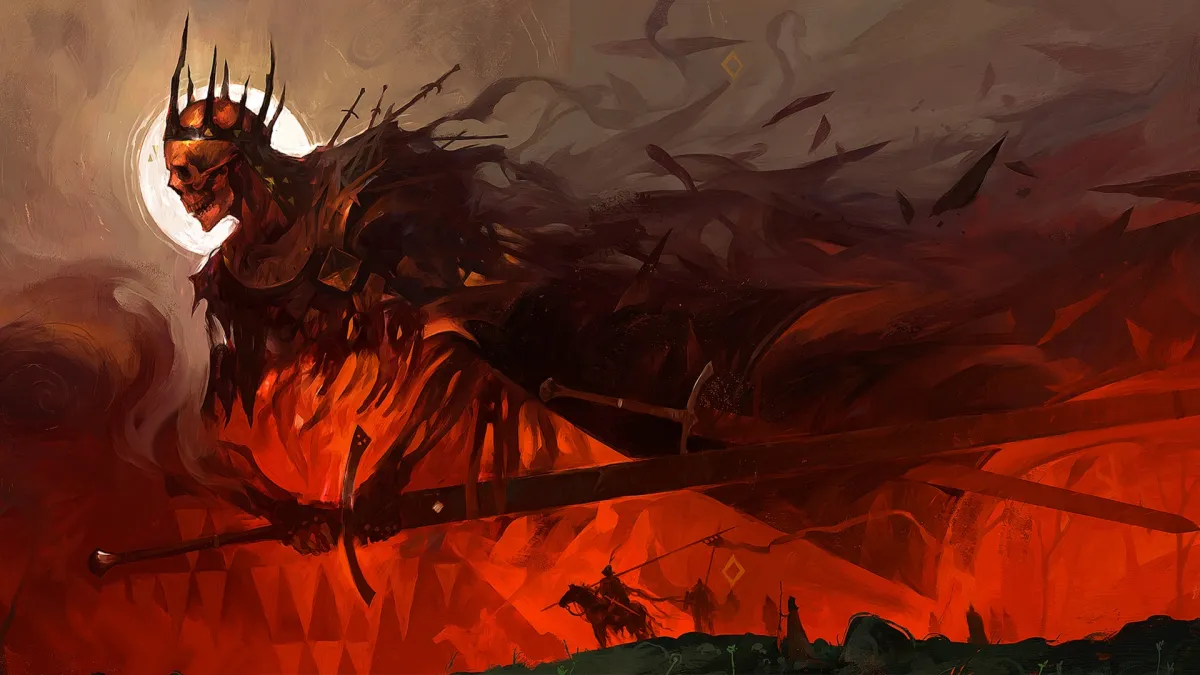 Photo: Elden Ring, via 4kwallpapers.com
These games treat obtuse mechanics and hidden systems as features, not bugs. They expect players to experiment, fail, and gradually understand through repetition. In other words, they're designed for exactly the kind of stubborn, independent approach that British gamers naturally favour.
It's no coincidence that the UK has some of the most passionate Soulsborne communities in the world. Finally, games that reward our natural inclination to ignore helpful advice and learn everything the hard way.
Developers Fight Back
Game designers have cottoned on to our tutorial-skipping ways and started fighting back with increasingly sneaky tactics. Modern games hide tutorials in plain sight, disguising essential instruction as natural gameplay progression.
The opening of The Last of Us Part II doesn't feel like a tutorial, but you'll learn every essential mechanic whilst thinking you're just playing the game. Horizon Zero Dawn teaches complex combat systems through organic encounters that feel like story moments rather than lessons.
This psychological trickery works because it preserves our illusion of independence whilst actually providing comprehensive instruction. We get to feel like gaming geniuses who figured everything out naturally, whilst actually being carefully guided through every essential system.
The Unintended Consequences
Our tutorial-skipping tradition has had some properly mental consequences for British gaming culture. We've developed an entire ecosystem of YouTube guides, Reddit threads, and forum posts dedicated to explaining things that games already explained perfectly well.
British gamers will spend twenty minutes watching a video about combat mechanics rather than spending two minutes reading the in-game explanation. We've essentially outsourced our tutorial consumption to other people, maintaining the fiction that we're not really getting help — we're just watching entertainment.
This has created a parallel gaming education system run entirely by players for players. Some of the most successful British gaming YouTubers built their careers explaining mechanics that games already explained, just in a format that doesn't feel like formal instruction.
The Generational Divide
There's a growing split between older British gamers who learned their stubbornness on 8-bit computers and younger players who grew up with more intuitive interfaces. Gen Z gamers are more likely to engage with tutorials, partly because they've never known a world where games didn't explain themselves properly.
But even younger British players show traces of the national character. They might not skip tutorials entirely, but they'll rush through them as quickly as possible, absorbing just enough information to get started before diving into proper experimentation.
Embracing the Chaos
Here's the thing: our stubborn refusal to read instructions isn't entirely a problem. British gamers have developed exceptional pattern recognition, problem-solving skills, and adaptability precisely because we force ourselves to figure things out independently.
We're also more likely to discover unintended mechanics, creative strategies, and emergent gameplay possibilities because we approach games without preconceptions about "correct" methods.
Our tutorial-skipping tradition has made British gaming culture uniquely creative and resilient. We might struggle with basic mechanics for longer than necessary, but we also find solutions that the developers never intended.
So next time you catch yourself skipping a tutorial and immediately regretting it, remember: you're not being stupid, you're being British. And sometimes, that's exactly what gaming needs.