Log Off, Load Up: The Great British Escape From Social Media Hell Is Happening Right Now
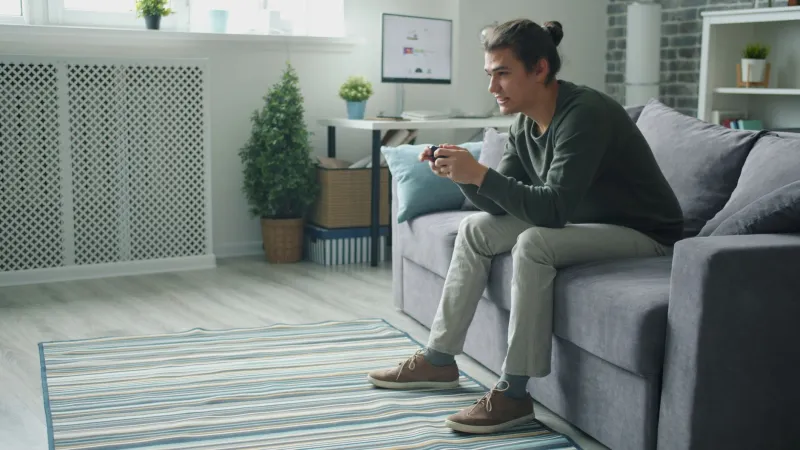
Somewhere between the seventeenth consecutive post about a political catastrophe and the third unsolicited opinion from someone they went to school with fifteen years ago, British gamers are doing something radical.
They're turning it off.
Not the internet entirely — let's not get carried away, we're British, we still need to check the weather app obsessively and argue about whether a Jaffa Cake is a biscuit. But an increasingly large chunk of the gaming population is making a deliberate, conscious choice to swap their social media feeds for their favourite games — and they're feeling genuinely, measurably better for it.
This isn't a niche wellness trend being peddled by a lifestyle influencer in a linen shirt. It's a genuine behavioural shift happening across living rooms, bedrooms, and spare offices up and down the country. And the gaming industry — perhaps not entirely by design — is the unlikely beneficiary.
The Feed That Broke the Camel's Back
Let's be honest about what social media has become for a lot of people. What was once a genuinely enjoyable way to stay in touch with mates and share the occasional meme has, for many users, curdled into something exhausting and occasionally horrible.
The algorithms — and we use that word with the same weary contempt it now deserves — have been ruthlessly optimised for engagement, which turns out to be a polite way of saying outrage. Angry posts travel further. Controversial takes get amplified. Your feed becomes a relentless conveyor belt of things designed to make you feel anxious, furious, or both simultaneously.
For a lot of British gamers, the breaking point arrived quietly. Not with a dramatic account deletion, but with a simple realisation: the hour they'd spent doom-scrolling had left them feeling genuinely worse, whereas the hour they'd spent playing Baldur's Gate 3 had left them feeling, well, rather good actually.
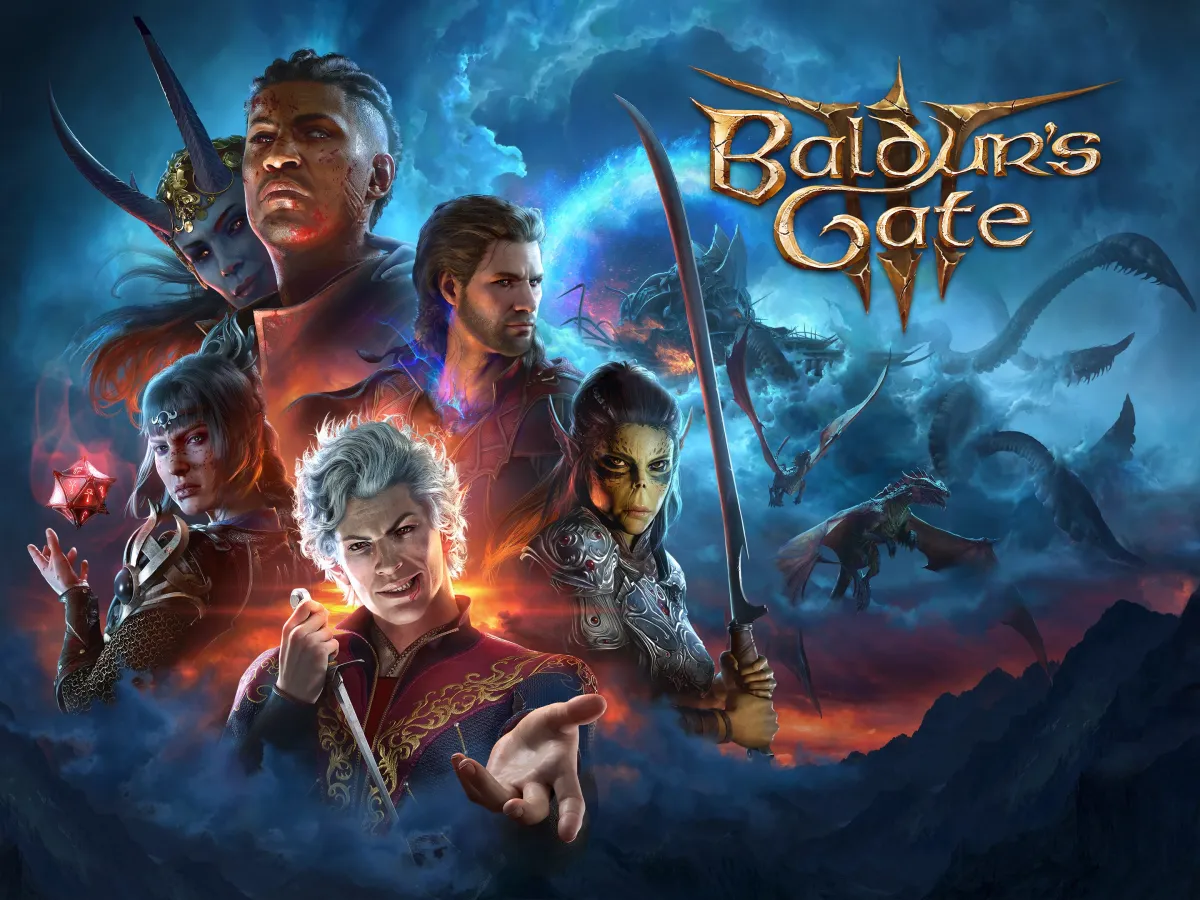 Photo: Baldur's Gate 3, via image.api.playstation.com
Mark, a 34-year-old from Leeds who asked us not to use his surname, puts it succinctly: "I used to spend my evenings on Twitter — sorry, X, whatever it's called now — getting wound up about things I couldn't control. Now I just play games instead. My blood pressure has probably halved."
He's not alone. Not even slightly.
Which Games Are Winning the Detox Derby?
Not every genre benefits equally from this particular exodus, and it's genuinely interesting to look at which types of games are pulling the biggest audiences from the social media refugees.
Cosy games — that wonderfully vague category encompassing everything from Stardew Valley to Spiritfarer — have been on a remarkable run. The appeal is obvious: low stakes, gentle pacing, and an almost complete absence of the kind of conflict that makes social media so draining. You're not being judged. Nobody is shouting. The worst thing that happens is your turnips don't sell at a great price.
Open-world games with rich single-player narratives are also thriving. Titles that demand your full attention — The Witcher 3, Elden Ring, Hogwarts Legacy — essentially require you to be present in a way that scrolling never does. You can't half-watch a FromSoftware boss fight while checking your notifications. The game physically won't let you be distracted.
Even multiplayer games are getting a look-in, provided they come with a good community. Discord servers built around specific games have become, for many players, a genuine alternative to mainstream social media — smaller, more focused, and mercifully free of the engagement-maximising nightmares that make platforms like TikTok and Instagram feel like psychological experiments.
The Irony Nobody Wants to Talk About
Here's the awkward bit, though: gaming and social media have become deeply intertwined in ways that complicate the clean narrative of "games good, feeds bad."
Game publishers push players toward social media engagement constantly. Live service games reward players for logging in daily — a mechanic that mimics the compulsive check-in loop of Instagram with uncanny precision. Some titles actively require social media accounts to function properly. The "share your achievement" button is never more than a thumbstick-click away.
There's also the not-insignificant issue of gaming communities on social media, which can be — how to put this diplomatically — not always a particularly wholesome environment. Gaming Twitter, in particular, has a well-documented history of being an absolute nightmare.
So the picture is messier than a simple "swap your phone for a controller and feel better" message. What players seem to be doing, more precisely, is curating their digital lives more deliberately — keeping the parts of gaming culture they enjoy, ditching the algorithmic chaos that makes them miserable, and being more intentional about where they spend their attention.
What the Numbers Are Suggesting
Anecdote is one thing, but the broader data is pointing in the same direction.
Single-player game sales have been robust in recent years, even as live service titles struggle to retain audiences long-term. The cosy game market has expanded dramatically. Games marketed explicitly on their "relaxing" qualities — something that would have seemed bizarre as a selling point a decade ago — are finding genuine commercial success.
Meanwhile, research into screen time habits consistently shows that people are becoming more aware of how different types of digital activity affect their mood. The distinction between "passive scrolling" and "active play" is one that players are increasingly making for themselves, even without being told to.
Sarah, a 28-year-old graphic designer from Bristol, describes her evening routine with the kind of clarity that suggests she's thought about this quite a bit: "I give myself twenty minutes on Instagram after work, then it goes face-down on the table and I play something for a couple of hours. It's the only way I've found to actually switch off. The game keeps my brain busy in a good way. Social media just keeps it busy in a bad way."
The Quiet Revolution in Your Living Room
What's emerging, then, isn't quite the dramatic social media exodus that tech commentators have been predicting for years. It's something more subtle and, in many ways, more interesting: a deliberate rebalancing of digital life, with gaming as the chosen alternative.
British gamers have always had a particular talent for finding comfort in their hobby — from the Spectrum era onwards, there's been something almost defiant about retreating into a game when the world outside gets a bit much. The current moment feels like a natural extension of that tradition, scaled up by the particular awfulness of the modern social media landscape.
The algorithm wants your attention. Your console wants your attention too, obviously. But at least the game gives you something back — a story, a challenge, a moment of genuine satisfaction when you finally beat the dungeon you've been stuck on for a fortnight.
Turn off the feed. Load up the game. Britain, it turns out, is already ahead of you.