Unplug and Play: Why Going Offline Might Be the Most Radical Thing a British Gamer Can Do

There is a particular kind of panic that strikes a modern gamer when the internet goes down. The cold sweat. The frantic router restart. The undignified moment of checking whether the neighbours' Wi-Fi has a guessable password. We have, without quite noticing, become completely dependent on a permanent connection to enjoy our hobby — and somewhere along the way, that started feeling a bit wrong.
So here's a genuinely radical proposition: what if you just didn't bother?
What if the best gaming session you'll have this year involves absolutely no internet connection, no server authentication, no live service notifications, and certainly no day-one patch the size of a small country? What if the answer to gaming fatigue isn't a new release, but a deliberate, cheerful disconnection from the whole exhausting apparatus of modern online gaming?
A growing number of British gamers — and not just the nostalgic ones — reckon that's exactly right.
The Always-Online Creep Nobody Voted For
Let's be honest about how we got here. It happened gradually, then all at once. First it was multiplayer modes requiring a connection, which was fair enough. Then it was optional cloud saves. Then it was background updates that were technically skippable but made the game slightly worse if you skipped them. Then came the live service games that simply ceased to function without a server handshake. Then single-player games started requiring online authentication. And now we have titles that are, in every meaningful sense, impossible to play without a broadband subscription propping them up.
At no point did anyone hold a referendum on this. The British gaming public, famously patient and polite, largely grumbled and got on with it. But the grumbling has been getting louder.
"I tried to play a game I'd bought during a power cut last winter," says Mark, a 34-year-old teacher from Coventry. "Couldn't authenticate. Sat there with a fully charged laptop and a game I owned and couldn't play it. That felt like being robbed in slow motion."
He's not alone. The frustration is real, widespread, and increasingly cutting through the industry's cheerful PR about "connected experiences" and "living game worlds."
The Offline Faithful and What They're Playing
The good news — and there is good news — is that the offline gaming world remains genuinely, gloriously rich. The games that don't need the internet to function are often, rather pointedly, some of the best ones.
The Souls series. The Witcher 3. Hollow Knight. Stardew Valley. Hades. Baldur's Gate 3. These aren't dusty relics of a pre-connected age — they're some of the most critically acclaimed, commercially successful games of recent years, and they work perfectly well in a signal dead zone. Stardew Valley, in particular, has become something of an unofficial mascot for the offline gaming movement: endlessly relaxing, infinitely replayable, and blissfully indifferent to your broadband speed.
Handheld gaming has given offline play a particular boost. The Nintendo Switch — still enormously popular in the UK — is fundamentally designed around the idea that you might be somewhere without reliable Wi-Fi, and its software library reflects that philosophy. Commuters on the London Underground, who spend a significant portion of their journeys in a mobile signal wasteland, have been quietly championing offline gaming for years.
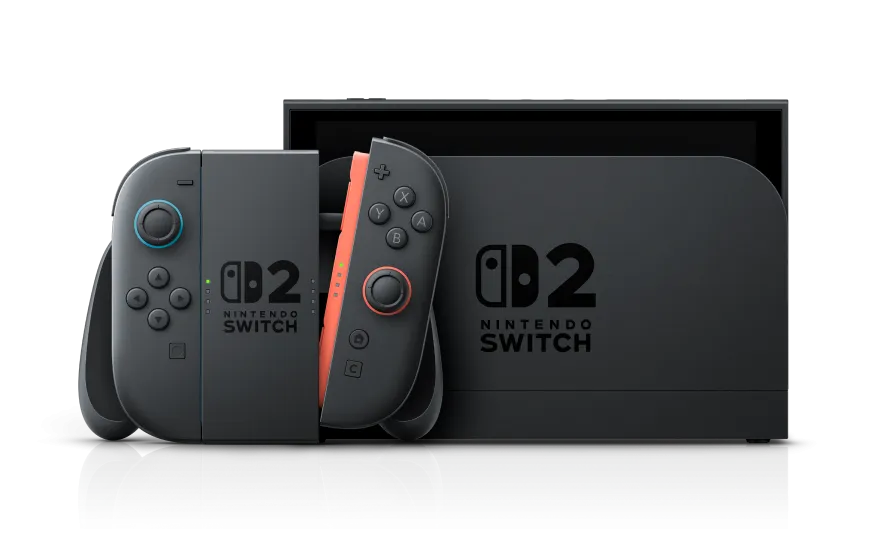 Photo: Nintendo Switch, via www.nintendo.com
 Photo: London Underground, via www.mapametro.com
"The Tube is basically a dedicated offline gaming zone," observes one regular commuter with the weary wisdom of someone who has completed several JRPGs between Morden and Brixton. "You learn very quickly which games actually work down there and which ones just show you an error message."
Is Always-Online Actually Making Games Worse?
This is the question that the industry would rather not answer directly. The honest answer, in many cases, is yes.
Always-online requirements introduce latency into experiences that don't need it. They create artificial dependencies that turn server shutdowns into game-ending events — you will never be able to play certain titles you've purchased once their servers go dark, which is an extraordinary thing to accept as normal. They encourage design decisions that prioritise engagement metrics over actual enjoyment, because when a game is always connected, it can always be monitored, and the temptation to optimise for playtime over quality is overwhelming.
Live service games, for all their occasional brilliance, have a tendency to become part-time jobs. The seasonal battle pass. The daily login bonus. The weekly challenge that expires if you don't complete it. These mechanics are not designed to make your gaming experience better. They are designed to make you feel guilty for doing anything else with your Tuesday evening.
Offline games, freed from the requirement to retain your attention indefinitely, can simply be... complete. Finished. Done. A thing you experience, enjoy, and put down when you're satisfied. What a concept.
The Community Quietly Championing the Unplugged Life
Spread across Reddit, Discord servers and gaming forums, there's a loose but passionate community of British gamers who actively seek out and celebrate offline experiences. They swap recommendations, share lists of games that work without internet, and occasionally vent — with considerable eloquence — about the state of modern game design.
Retro gaming communities overlap significantly with this group. The resurgence of interest in older consoles and games isn't purely nostalgia — it's partly a reaction to the complexity and connectivity requirements of modern gaming. A SNES cartridge works the same way it did in 1993. No patches. No authentication. No server dependency. Just the game, the controller, and you.
Britain's retro gaming scene, which has been booming for several years now, is in many ways an offline gaming movement that predates the terminology.
Switching Off to Switch On
There's something almost meditative about deliberately choosing to play offline. Turning off the notifications. Ignoring the update prompts. Closing the social features. Just playing a game because you want to play a game, on your own terms, in your own time, without a corporation monitoring your behaviour and nudging you towards a microtransaction.
It won't fix the industry's addiction to connectivity. Publishers will keep building always-online requirements into games because it serves their interests, and most players will keep accepting it because the path of least resistance usually wins.
But the offline faithful are onto something real. In a gaming landscape that sometimes feels like it's trying to be everything at once — social platform, live entertainment, subscription service, esport, shop — there's genuine, subversive joy in demanding that a game just be a game.
Router off. Controller up. Bliss.