Stick Drift and Sticky Fingers: Why Your £70 Controller Is Already Falling Apart
You're deep into a tense firefight. Ammo is low, your squad is pinned down, and victory is tantalisingly close. Then your character starts slowly, inexplicably, walking into a wall. You haven't touched a thing. Congratulations — you've joined the millions of British gamers who've had their evening ruined by controller drift, the hardware plague that refuses to go away.
It sounds trivial. A tiny wobble in an analogue stick. But ask anyone who's lost a ranked match, died on a final boss, or watched their carefully aimed shot sail off into the void, and they'll tell you it's anything but.
What Is Drift, and Why Is It Everywhere?
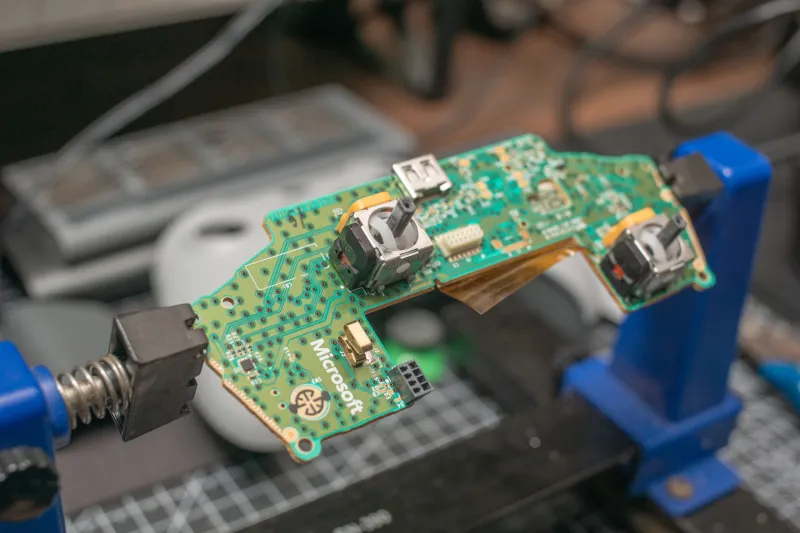
At its core, controller drift occurs when the analogue stick registers movement that isn't there — a ghost in the machine, except this ghost costs you real money. The problem stems from the potentiometers inside the stick mechanism: small components that wear down over time, causing erratic, unintended inputs.
The issue isn't new. Nintendo faced a class action lawsuit in the US over Joy-Con drift back in 2019, and the problem has dogged their hardware ever since. But PlayStation and Xbox controllers have increasingly joined the club, with Sony's DualSense — the sleek, futuristic pad that launched alongside the PS5 — developing a particularly nasty reputation for early-onset drift. Some players report it kicking in within months of purchase.
"I've had three DualSense controllers in two years," says Jamie, a 26-year-old from Manchester who asked us not to use his surname. "The first one drifted after about four months. Sony replaced it under warranty, fair enough. The second one? Same thing, six months later. The third is already starting. I'm basically renting these things."
At £69.99 a pop for a standard DualSense, that's a painful subscription nobody signed up for.
The Repair Shop Perspective
We spoke to Darren, who runs a games repair business out of Coventry and has seen his workload shift dramatically over the past three years. "Drift repairs are probably 60 percent of what I do now," he tells us, not without a hint of grim satisfaction. "PlayStation 5 controllers, Xbox Series controllers — they're all coming through the door. The components they're using just aren't built to last."
Darren charges between £25 and £40 to fix a drifting stick, which sounds reasonable until you factor in postage, waiting times, and the uncomfortable reality that the replacement parts — often Hall effect sensors, which use magnets rather than physical contact and are far more durable — should arguably have been fitted at the factory in the first place.
"Hall effect sticks don't drift," Darren explains, with the weary patience of someone who's said this approximately ten thousand times. "They've been around for years. Third-party manufacturers use them. Sony and Microsoft choose not to. Make of that what you will."
Make of that what you will, indeed.
The British Consumer Squeeze
For UK gamers, the timing couldn't be worse. With the cost of living crisis still biting hard and disposable income shrinking, shelling out £70 on a replacement controller — or even £30 on a repair — is no small ask. Gaming was supposed to be the affordable entertainment option. A console game for forty quid keeps you busy for fifty hours. A cinema ticket lasts two. The maths used to work. Now, factor in controllers that last eighteen months before going haywire, and the arithmetic gets considerably grimmer.
Under UK consumer law, goods must be of satisfactory quality and last a reasonable length of time. A controller failing within a year arguably falls short of that standard, and Citizens Advice has increasingly seen gaming hardware complaints cited in broader consumer grievance cases. In theory, you have rights. In practice, navigating warranty claims with large corporations while juggling a job, a family, and a growing backlog is its own particular form of suffering.
Sony did quietly extend the DualSense warranty period in some markets following sustained pressure, but critics argue this is a sticking plaster on a structural wound.
Is Anyone Actually Fixing This?
The good news — and there is some, mercifully — is that the market is responding even if the manufacturers aren't. Third-party controllers from brands like Hori, Nacon, and Turtle Beach have improved dramatically in quality and now offer Hall effect sticks as standard on mid-range models. The trade-off is aesthetics and some feature parity, but for many players, a controller that actually works is considerably more appealing than one that looks gorgeous while slowly sabotaging their gaming sessions.
There's also a growing DIY repair community online, with YouTube tutorials walking players through stick replacements with the kind of calm authority usually reserved for open-heart surgery. It's fiddly, it voids your warranty, and it requires a steady hand — but for the technically confident, it's a viable option.
As for legislative pressure, the EU has been pushing harder on right-to-repair legislation that could force manufacturers to make spare parts more accessible. Post-Brexit Britain is watching from a slight distance, though consumer groups are lobbying for equivalent protections domestically.
The Bottom Line
Controller drift is one of those problems that's simultaneously mundane and genuinely maddening. It's not a game-breaking bug or a catastrophic server failure — it's a small, creeping mechanical failure that chips away at your enjoyment one phantom input at a time, while the companies responsible quietly pocket your replacement purchase.
Until manufacturers commit to more durable components — and given the financial incentive to do otherwise, don't hold your breath — the best advice is depressingly practical: check your warranty, know your consumer rights, and maybe keep an eye on Darren in Coventry.
Your thumbs deserve better. Your wallet certainly does.