Losing the Plot: Britain's Gaming Rage Problem Is Real, It's Loud, and It's Getting Worse
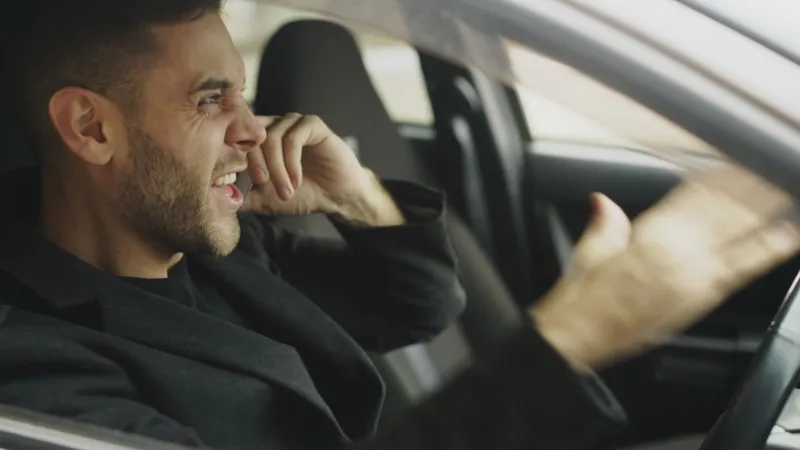
Let's not pretend it hasn't happened to you. Maybe it was a rubber-band AI opponent on the final lap. Maybe it was a multiplayer lobby full of twelve-year-olds who are inexplicably better than you at everything. Maybe it was the third consecutive death to a boss you've been fighting for an hour and a half on a Tuesday night when you've got work in the morning.
Whatever the trigger, you know the feeling. The jaw tightening. The controller grip intensifying. The very specific internal monologue that would make your nan faint. British gaming rage is not a new phenomenon — but right now, it is louder, more visible, and more culturally complex than it has ever been.
The Numbers Don't Lie (And Neither Do the Dent Marks)
Controller manufacturers won't publish the data, but the secondary market tells its own story. Refurbished and "cosmetically damaged" controllers consistently rank among the most common categories on UK second-hand platforms. The damage is rarely accidental. A controller with a cracked shell and a suspiciously dented back panel has a story, and that story involves someone losing on FIFA.
A 2023 survey by a UK consumer tech group found that nearly one in three British gamers admitted to physically damaging a peripheral or piece of hardware in anger. A further 40% confessed to shouting loudly enough that someone in their household came to check on them. These are not the statistics of a nation coping well.
And then there's the online dimension, which has transformed private frustration into public spectacle.
When Rage Goes Live
Streaming culture has done something genuinely strange to gaming anger. What was once a solitary, shameful moment — the closed-door tantrum, the whispered expletive — has become content. British streamers throwing controllers, screaming at screens, and descending into elaborate rants have found audiences numbering in the hundreds of thousands. The rage is the product.
This creates an odd feedback loop. Genuine anger gets amplified and rewarded with engagement. Performed anger becomes indistinguishable from the real thing. And viewers, watching someone else lose their mind over a video game, feel either vicarious catharsis or the creeping urge to do the same.
Tom, 26, a part-time streamer from Manchester, is candid about the economics of it. "If I stay calm when I die, people click off. If I react big — not fake, just big — the clips get shared. There's a version of me that's just... louder. And that version does better numbers."
He pauses. "Which is its own kind of annoying, honestly."
The Social Media Pressure Cooker
Beyond streaming, social media has fundamentally altered the competitive landscape of British gaming. Platforms like Twitter/X and TikTok serve up a relentless feed of other people's highlights — the perfect speedrun, the clutch final-zone win, the flawless ranked climb. What they don't show is the eight hours of mediocre play that preceded the clip.
The result is a distorted sense of what "normal" performance looks like. British gamers, who have historically had a healthy tendency to take the mickey out of themselves, are increasingly measuring their skills against a curated fiction. And when reality — which involves missing shots, making bad calls, and losing to people with faster broadband — fails to match the highlight reel, frustration follows.
Dr. James Okoro, a behavioural psychologist at the University of Leeds who studies competitive digital environments, describes it as "achievement inflation." "Social media has created an environment where average performance feels like failure," he explains. "When your baseline expectation is shaped by other people's best moments, your own ordinary moments feel disproportionately bad. That gap between expectation and reality is where a lot of gaming rage lives."
Is British Rage Actually Different?
There's a compelling argument that British gaming rage has a particular cultural flavour. We are not, as a nation, especially comfortable with expressing frustration openly in most social contexts. We mutter. We sigh. We say "it's fine" when it is very clearly not fine. Gaming, historically a private or semi-private activity, has functioned as a pressure valve — a space where the rules of British emotional repression temporarily don't apply.
The problem is that pressure valve is now, increasingly, a public one. And the cultural norms around what constitutes acceptable venting online are considerably blurrier than the ones governing, say, losing your temper at the bus stop.
Liz, 31, from Edinburgh, who moderates a large UK gaming Discord server, has watched the shift happen in real time. "Five years ago, people raged in the game and then complained in the server and that was the end of it. Now people are filming themselves raging, posting it, defending it, and then getting into arguments about whether their rage was justified. It's a whole ecosystem."
"And then they wonder," she adds, "why they're still annoyed three hours later."
Is Any of This Actually Bad for You?
Here's where it gets complicated. Gaming rage, in its purest form, is a normal human response to challenge, failure, and the particular injustice of losing to someone who is clearly cheating (they are definitely cheating). Psychologists broadly agree that brief, controlled emotional expression isn't harmful and may, in certain circumstances, provide genuine stress relief.
The issue is the "controlled" part. When rage becomes habitual, when it spills into communities and poisons competitive spaces, when it escalates from frustration to abuse — at which point real people on the other side of a headset are on the receiving end — it stops being catharsis and starts being something else entirely.
Dr. Okoro is measured on this point: "There's a meaningful difference between the person who shouts at their television and the person who directs that energy at other players. One is venting. The other is a behaviour problem that gaming culture has been slow to address."
Britain's gaming community is, for the most part, self-aware enough to know where that line is. The question is whether the structural incentives — the engagement algorithms, the content economy built around reaction, the social media pressure cooker — are making it harder and harder to stay on the right side of it.
Press Start to Calm Down
There are, quietly, encouraging signs. Mental health awareness within gaming communities has improved markedly. Streamers openly discussing burnout, anxiety, and the psychological toll of competitive play have found audiences as large as their raging counterparts. Platforms are, slowly and imperfectly, getting better at addressing harassment.
And most British gamers, if you ask them honestly, will tell you they already know when they've crossed the line. The shame is usually instantaneous.
The controller goes back in the hand. The lobby reloads. Someone in the next room shouts "are you alright in there?"
"Fine," comes the reply. "Totally fine."
It's not fine. But it will be. Probably by the next checkpoint.