Shelves Bare, Tempers Frayed: Inside Britain's Physical Game Supply Meltdown
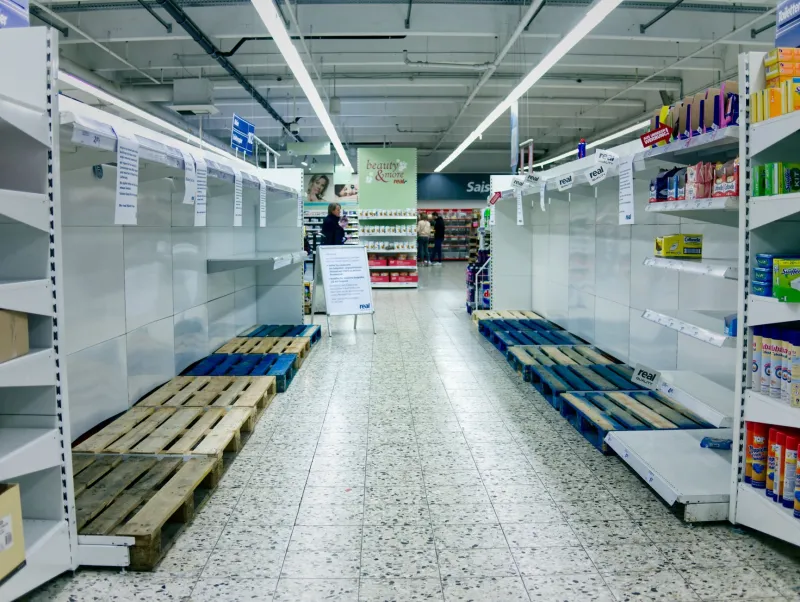
There's something uniquely deflating about walking into a game shop, cash in hand, ready to buy a specific title, and finding an empty peg where it should be. Not sold out — just never arrived. The staff shrug apologetically. The distributor hasn't confirmed a new delivery date. The publisher's PR team is not returning calls. The game exists. You just can't have it.
This isn't a one-off. Across Britain, independent game retailers are navigating a supply chain that has become, in the words of one Midlands shop owner we spoke to, "completely unpredictable in a way it never used to be." Physical game releases are arriving late, in insufficient quantities, or not at all — and the reasons are more tangled than a SCART cable behind an old telly.
How Did We Get Here?
The short answer involves a perfect storm of overlapping crises: the lingering disruptions from COVID-era manufacturing shutdowns, post-Brexit import friction adding cost and complexity to European distribution routes, a global semiconductor shortage that, while primarily associated with consoles, had knock-on effects throughout the supply chain, and a fundamental restructuring of how publishers think about physical retail.
The longer answer requires a trip through the somewhat unglamorous world of games distribution in the UK, which is dominated by a small number of major players. When those players experience warehouse management issues — and several have, in documented and painful fashion over the past few years — the ripple effects are felt everywhere from the Glasgow indie shop to the Exeter trading card café that also stocks games.
"We had a major title come in six weeks after launch," says Marcus, who co-owns a specialist games retailer in Leeds. "By that point, everyone who wanted it had either bought it digitally or ordered it online from a supermarket. We got the stock, it sat on the shelf, and we eventually sold it at a discount. That's not a business model."
The Supermarket Problem
The relationship between independent game retailers and major supermarkets is, diplomatically speaking, complicated. Tesco, Asda, and their peers carry a limited but highly visible selection of games — typically the biggest releases, priced aggressively — and their purchasing power means they're often prioritised in allocation decisions when stock is tight.
This is market logic doing what market logic does, but the practical effect is that a Tesco in Swindon might have forty copies of a major release while the independent shop two streets away has none. And when the supermarket inevitably discounts that stock to clear shelf space for seasonal promotions, the indie retailer — who finally received their allocation — is left trying to sell the same game at full price against a competitor who's practically giving it away.
"The publishers talk about supporting the high street," says Naomi, who runs a well-regarded independent in Bristol. "And then the allocation decisions happen and you realise that 'supporting the high street' means something very specific, and it doesn't necessarily include you."
Publishers, for their part, are navigating their own pressures. Digital sales now account for the majority of revenue for most major titles, which means physical print runs are smaller, margins are tighter, and the calculus around who gets stock first increasingly favours volume buyers.
The Regional Lottery
One of the less-discussed aspects of the supply crisis is its uneven geographical distribution. London and the South East, with their concentration of larger retail outlets and proximity to major distribution hubs, tend to fare better than retailers in the North, Scotland, Wales, and rural England. A game that's widely available in Birmingham might be genuinely difficult to find in Inverness.
This matters because physical games still represent a meaningful cultural touchstone for many players — the box art, the manual (where they still exist), the ritual of ownership. For gamers in areas with poor broadband connectivity, physical media isn't merely nostalgic preference; it's a practical necessity. When the supply chain fails those regions, it fails the people who can least easily work around it.
What Are Distributors Actually Saying?
We reached out to several major UK game distributors for comment. The responses ranged from polite non-answers to detailed explanations that, stripped of corporate language, essentially confirmed what retailers had already told us: capacity constraints, post-pandemic recalibration, and ongoing logistical challenges are real, are being worked on, and will take time to fully resolve.
One distribution industry source, speaking on condition of anonymity, was more candid: "The honest answer is that physical game distribution in the UK was already under strain before COVID. The pandemic exposed weaknesses that were already there. Some of those have been addressed. Some haven't. The economics of physical retail are just genuinely difficult right now."
Are Publishers Listening?
There are some encouraging signs. Several mid-size publishers have invested in direct-to-consumer physical sales, cutting out distribution intermediaries and shipping directly to customers and specialist retailers. Limited Run Games and similar outfits have built entire business models around physical releases for games that would otherwise be digital-only, with apparent success.
A handful of UK-based publishers have also made explicit commitments to indie retail allocation — guaranteeing a percentage of physical stock goes to independent shops before supermarket fulfilment. Whether this survives commercial pressure at scale remains to be seen.
The Clock Is Ticking
For many independent retailers, the supply chain crisis isn't an abstract industry problem — it's an existential one. Shops that survived the pandemic on community goodwill, government support, and sheer stubbornness are now facing a market where the stock they need arrives unreliably, the competition is better resourced, and the publisher-retail relationship has shifted in ways that don't favour small operators.
"I love this shop," Marcus tells us, looking around at the carefully curated shelves that still, despite everything, manage to feel like somewhere worth visiting. "But I need the supply side to work. I can't build a business on apologies to customers."
The physical game isn't dead. Not yet. But its survival depends on a supply chain that currently looks less like a well-oiled machine and more like a loading screen that never quite finishes.
We've all been there. It's not a fun place to wait.