Why Your Ping Is Basically a Postcode Lottery — And Britain Is Losing
Why Your Ping Is Basically a Postcode Lottery — And Britain Is Losing
Let's paint a picture. It's a Friday evening. You've had a long week. You've earned this. You settle into your chair, load up your multiplayer game of choice, and watch with quiet horror as your ping climbs past 80ms, then 120ms, then — oh, brilliant — 200ms. Somewhere across a fibre-optic cable that inexplicably doesn't reach your street, someone in Seoul is about to shoot you through a wall you're fairly certain you were standing behind.
This is the lived reality of online gaming for a significant chunk of the United Kingdom. And it's getting harder to laugh off.
The Numbers Don't Flatter Us
Britain likes to think of itself as a reasonably modern, connected sort of place. The reality, particularly once you venture beyond the M25 or any major metropolitan centre, is considerably more patchy.
According to Ofcom's 2023 Connected Nations report, average UK residential broadband speeds sit at around 69 Mbps for fixed-line connections — a figure that sounds respectable until you learn that countries like Sweden, Denmark, and Singapore are routinely delivering three to five times that. More critically for gamers, raw download speed is only part of the story. Latency — that ping figure that determines whether your actions register in real time or arrive fashionably late — is heavily influenced by the type of connection, not just its speed.
Full fibre (FTTP — fibre to the premises) delivers the low, stable latency that online gaming demands. But as of early 2024, full fibre availability in the UK sits at around 55% of premises. That sounds like progress — and it is — but it means roughly 14 million UK homes still can't access it even if they wanted to. And in rural areas, the figure drops dramatically.
For those still on FTTC (fibre to the cabinet, then copper wire to your door), latency is higher, more variable, and prone to degrading under heavy household use. Which is to say: the moment your housemate starts streaming 4K content, your carefully maintained 45ms ping becomes someone else's problem.
Rural Britain Is Playing on Hard Mode
If you live in a market town in Shropshire, a village in the Scottish Borders, or pretty much anywhere in rural Wales, the conversation about gaming broadband takes on a different, more existential quality.
Average speeds in the most rural 10% of UK premises can fall below 10 Mbps, with latency figures that would make a professional esports player physically wince. These aren't edge cases or statistical anomalies — they're millions of actual people, many of them young, for whom online gaming is a primary form of social connection, now being quietly disadvantaged by infrastructure that simply hasn't kept pace.
The frustration isn't just competitive. It's social. Online multiplayer gaming is how a lot of people — particularly post-pandemic — maintain friendships, decompress, and feel part of something. When your connection turns every squad match into a slideshow, you're not just losing games. You're being gradually squeezed out of a social space.
Satellite broadband options like Starlink have provided a genuine lifeline for some rural households, delivering speeds and latency figures that would have seemed science fiction five years ago. But at around £75 a month plus hardware costs, it's an expensive solution to a problem that arguably shouldn't exist in 2025.
The Competitive Disadvantage Is Real
Here's where it gets properly uncomfortable for anyone who cares about UK gaming at a competitive level.
In ranked multiplayer games — from Valorant to Counter-Strike 2 to EA FC — latency differences of even 30-40ms can translate into meaningful mechanical disadvantage. Hit registration, ability timing, reaction windows: all of these are affected by connection quality in ways that skilled players will notice even if they can't always articulate precisely why they keep losing duels they feel like they should win.
The UK esports scene has grown substantially over the past decade, with British players and teams competing at the highest levels across multiple titles. But coaching staff and analysts will tell you, quietly, that connection quality remains a genuine variable in player development — particularly for talent coming through in areas where infrastructure investment has lagged.
Game servers help mitigate some of this. Most major titles run European servers, typically located in Frankfurt or Amsterdam, which gives UK players reasonably competitive baseline latency compared to, say, players in Australia. But the last-mile connection — from the server to your home — is where the UK's infrastructure gaps do their damage.
The Promises and the Reality
The government's Project Gigabit programme aims to deliver gigabit-capable broadband to 85% of UK premises by 2025, with a target of near-universal coverage by 2030. These are welcome ambitions. Whether they translate into reality on the ground is a different matter.
Rollout has been slower than projected in multiple regions, with rural contracts proving commercially unattractive for providers and logistically complex to execute. The communities that most need upgraded infrastructure are, by definition, the hardest and most expensive to reach.
Meanwhile, the gaming landscape continues to evolve in ways that make connectivity more critical, not less. Cloud gaming services like Xbox Cloud Gaming and GeForce Now are, theoretically, democratising access to high-end gaming experiences — but they're also brutally unforgiving of poor connections. The dream of gaming without expensive hardware becomes a nightmare of stuttering, artifacting mess if your broadband isn't up to it.
So What Actually Helps Right Now?
While the infrastructure catches up — slowly, unevenly, with all the urgency of a broadband engineer who's already had his lunch — there are practical steps that make a genuine difference.
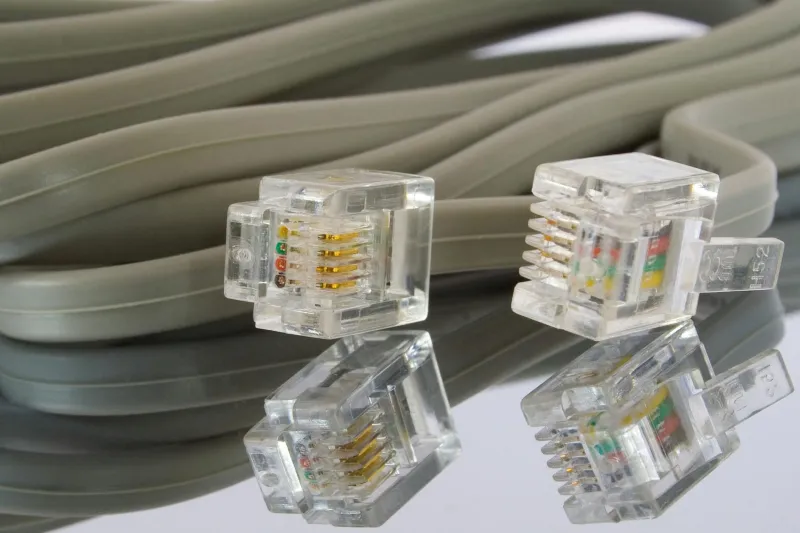
A wired ethernet connection rather than Wi-Fi is the single most impactful change most people can make, cutting latency and eliminating the interference that wireless signals attract from every other device in a modern home. Configuring Quality of Service (QoS) settings on your router to prioritise gaming traffic helps when bandwidth is shared. Choosing game servers manually, where titles allow it, can shave meaningful milliseconds off your connection.
None of this fixes the underlying problem. But it's the difference between playing at a disadvantage and playing at a catastrophic disadvantage, which is at least something.
Ultimately, Britain's online gaming community deserves better than a situation where your competitive chances are partly determined by your postcode. The fibre rollout needs to accelerate, the rural coverage gaps need urgent attention, and the conversation about digital infrastructure needs to treat gaming — a multi-billion pound sector and a primary leisure activity for millions of people — as the serious business it actually is.
Until then: plug in that ethernet cable. And maybe warn your housemate about the 4K streaming.