Spare Room Studios to Shiny Trophies: When Britain's Bedroom Developers Hit the Big Time
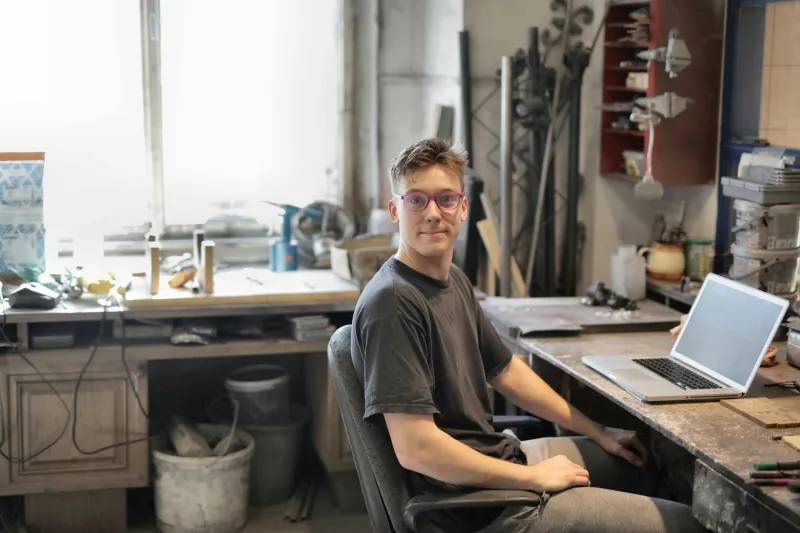
When Your Office Is Also Your Bedroom
There's something beautifully British about turning a complete lack of resources into a virtue. While American studios throw millions at marketing campaigns and Japanese developers craft games in purpose-built temples to creativity, we've got blokes in Stockport making award-winning masterpieces between the washing machine and a stack of unpaid bills.
The BAFTA Games Awards have become something of a showcase for this peculiarly British brand of scrappy ingenuity. Year after year, games that started life in spare bedrooms, garden sheds, and the back rooms of shared flats find themselves rubbing shoulders with the industry's biggest blockbusters. It's not just heartwarming—it's become our calling card.
The Shed-to-Stage Pipeline
Take Heaven's Vault, the archaeological adventure that had critics swooning and players frantically scribbling down hieroglyphs. Inkle Studios didn't start in some gleaming Silicon Valley office park. They began in a converted shed in Cambridge, with co-founder Jon Ingold working around a temperamental boiler that would occasionally flood the entire workspace.
"We'd have these moments where we're trying to debug code while standing in two inches of water," Ingold recalls with the sort of fond exasperation that only comes with hindsight. "But there was something about that chaos that kept us focused on what actually mattered—making something brilliant with whatever we had."
The game went on to pick up multiple BAFTA nominations, but more importantly, it proved that innovation doesn't require venture capital—just determination and a decent pair of wellies.
The Economics of Dreaming
What makes these stories particularly British isn't just the improvised workspaces or the sheer bloody-mindedness required to see them through. It's the way these developers have turned financial constraints into creative advantages. When you can't afford to license the latest engine or hire a team of specialists, you get inventive.
Thomas Was Alone, Mike Bithell's minimalist platformer about sentient rectangles, famously began as a Flash experiment created during lunch breaks at his day job. The game's distinctive visual style wasn't a bold artistic choice—it was what Bithell could manage with his limited programming skills and non-existent art budget. The result? A BAFTA win for Best Debut Game and proof that sometimes less really is more.
"I genuinely thought I was making something that maybe twelve people would play," Bithell admits. "The fact that it resonated with so many people taught me that authenticity trumps production values every single time."
The Support Network That Actually Works
Behind every bedroom-to-BAFTA success story lies a uniquely British support ecosystem that operates more like a village than a corporate hierarchy. Unlike other territories where breaking into the industry requires connections or capital, the UK scene runs on something far more valuable: genuine enthusiasm for good games.
Local game development meetups in cities across Britain have become informal talent exchanges where established developers actively mentor newcomers. It's not uncommon to find industry veterans spending their evenings in pub function rooms, offering feedback on prototypes and sharing war stories with developers who are still figuring out which end of Unity to hold.
Spiritfarer, the cosy management game about death and letting go, emerged from Thunder Lotus Games' London studio after years of the team attending these grassroots gatherings. Creative Director Nicolas Guérin credits the UK development community with helping shape the game's emotional core.
The Reality Check
Of course, not every spare room contains the next BAFTA winner. For every success story, there are dozens of developers who pour years into projects that never find an audience. The romantic notion of the lone genius coding their way to glory often glosses over the mental health challenges, financial stress, and relationship strain that comes with betting everything on a dream.
Outer Wilds, which swept multiple BAFTA categories, nearly didn't happen at all. Developer Alex Beachum spent three years living on savings and the goodwill of friends while working on the game's mind-bending time loop mechanics. "There were definitely moments where I wondered if I was just deluding myself," he admits. "The difference between persistence and stubbornness isn't always clear when you're in the thick of it."
What Success Actually Looks Like
The most telling thing about Britain's bedroom-to-BAFTA pipeline isn't the awards themselves—it's what happens after. Unlike developers in other territories who often get absorbed into larger studios or immediately start planning their next blockbuster, British indie success stories tend to stay small, stay personal, and stay connected to their roots.
Many BAFTA-winning developers continue working from the same humble spaces where they started, choosing creative freedom over corner offices. It's a decision that speaks to something deeper about the British development scene: success isn't measured purely in revenue or team size, but in the ability to keep making the games you actually want to play.
The Next Generation Loading
As we speak, there are developers across Britain hunched over laptops in bedrooms, garden sheds, and kitchen tables, working on what might be next year's surprise BAFTA contender. They're not backed by major publishers or armed with million-pound budgets. They've just got ideas, determination, and that peculiarly British belief that if you can't afford to do something properly, you might as well do it brilliantly.
In a industry increasingly dominated by corporate formulas and focus-group testing, these bedroom developers represent something precious: the pure, undiluted desire to create something meaningful. Long may they keep proving that the best games don't come from the biggest budgets—they come from the biggest hearts.