Insert Coin, Pay the Bill: The Booming Business of Getting Brits to Pay Through the Nose for Old Games in Trendy Venues
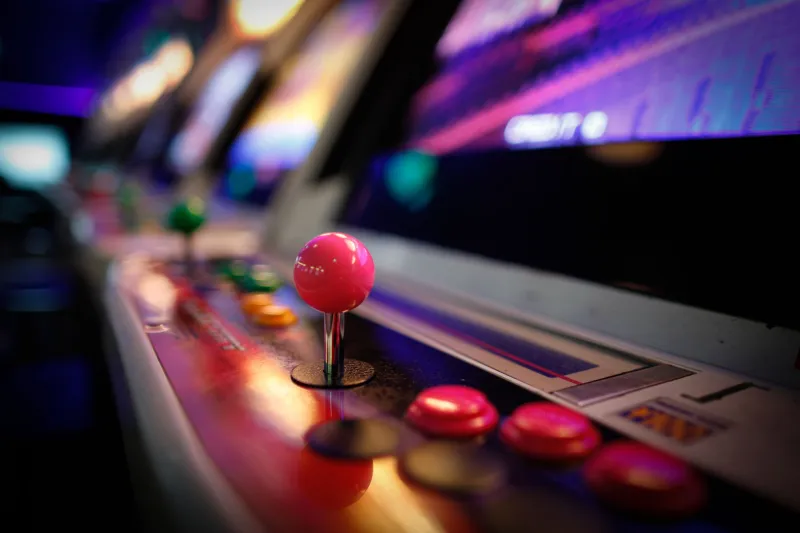
Let's get the obvious question out of the way immediately: why would anyone pay £15 for the privilege of playing Street Fighter II in a bar when they could play it at home for free, in their pants, with significantly cheaper drinks?
It's a reasonable thing to wonder. And yet, across Britain's town and city centres, gaming-themed hospitality venues are doing a roaring trade. Retro arcade bars, gaming cafés, Nintendo-themed pop-ups, and immersive console experiences are opening at a pace that suggests either a genuine cultural moment or an extremely well-funded collective delusion.
We went digging. What we found was more interesting — and more complicated — than a simple nostalgia cash-grab.
The Landscape, Briefly
The UK's gaming hospitality scene has exploded over the past five years in ways that would have seemed improbable even a decade ago.
Manchester alone now boasts several dedicated arcade bars, with NQ64 — one of the country's most successful chains — having expanded from a single venue to multiple cities including Birmingham, Leeds, Liverpool, Edinburgh, and London. The formula is consistent and, clearly, effective: free-to-play arcade machines, a full bar, neon lighting, and a soundtrack that makes you feel like it's permanently 1991.
London has gone several steps further, with everything from dedicated retro game rental cafés in East London to high-concept pop-up experiences tied to specific game releases. When major titles launch, temporary immersive venues have become a standard part of the marketing playbook — think themed cocktails, branded décor, and Instagram opportunities carefully engineered to do the promotional heavy lifting.
Beyond the big cities, the trend has filtered into smaller towns with surprising vigour. Independent gaming cafés have opened in places like Exeter, Dundee, and Shrewsbury, catering to audiences that the London-centric press tends to forget exist.
The People Building These Places
The entrepreneurs behind Britain's gaming venue boom come in broadly two varieties, and understanding the difference matters.
The first type is the genuine enthusiast — someone who grew up gaming, accumulated a collection of vintage hardware and software, and eventually decided that sharing it with a paying public made more sense than letting it gather dust in a spare room. These operators tend to run smaller, more personal venues with deep collections and genuine passion behind the curation. The Retro Games Club model: come in, pick up a controller, feel like you're raiding a really well-organised mate's house.
The second type is the hospitality professional who spotted a gap in the market. These are people with backgrounds in bars, restaurants, or events who recognised that gaming provided a compelling experiential hook in an era where people increasingly want their nights out to involve more than just drinking. For this cohort, the games are almost secondary — they're the theatre that justifies the premium drinks prices and the Instagram-friendly interior design.
Neither approach is inherently better or worse. But they produce very different venues, and regular punters have become quite good at telling them apart.
Jamie, 31, who runs a small gaming café in Sheffield, falls firmly into the first camp. He opened his venue two years ago after spending a decade collecting vintage consoles and cartridges. "I wanted a place where people could actually play the games properly, not just pose next to a Pac-Man cabinet," he says. "We've got working hardware, original controllers, and staff who can actually talk to you about the games. That's the bit people keep coming back for."
Why Are People Actually Going?
This is the genuinely fascinating part of the story, because the motivations are more layered than simple nostalgia.
Yes, nostalgia is a factor — a big one. For thirty and forty-somethings, playing Goldeneye on an actual N64 with four people crammed around a screen triggers something that no modern remake quite replicates. The specific texture of that experience — the slightly flickery CRT display, the chunky controller, the ridiculous proximity of your friends — is emotionally distinct from playing the remastered version alone on a modern console.
But younger visitors — people who didn't grow up with these games — are showing up in significant numbers too, and their motivations are different. For them, retro gaming venues offer something that feels genuinely novel: a communal, physical, screen-based activity that isn't watching a film or sitting in silence on their phones. The sociability of arcade gaming, which had largely disappeared from British culture when the original arcades closed, turns out to have been missed more than anyone realised.
There's also the experience economy angle, which hospitality consultants will talk your ear off about given half a chance. People — particularly younger adults — are increasingly spending their disposable income on experiences rather than things. A night at an arcade bar is, in this framing, competing not with owning the games yourself but with going to an escape room, attending a comedy night, or doing one of those pottery classes that have inexplicably become fashionable.
Emma, 26, from London, visits gaming venues regularly despite owning a gaming PC at home. "It's about being somewhere with other people, having a laugh," she says. "I can play games at home whenever I want. But I can't recreate that atmosphere — the noise, the competition, the whole vibe — in my flat."
The Business Reality
For all the enthusiasm, the economics of running a gaming venue in Britain are not for the faint-hearted.
Rents in the city-centre locations where these venues thrive are brutal. Vintage hardware requires constant maintenance — original consoles are, at this point, several decades old, and finding people who can repair a Mega Drive motherboard is not as straightforward as calling a standard IT support line. Licensing, insurance, and the general misery of running a hospitality business in post-pandemic Britain add further complications.
The chains with investment behind them — NQ64, Pixel Bar, Roxy Ball Room — have the resources to weather difficult trading periods. Smaller independents are more exposed. Several gaming cafés that opened during the post-lockdown boom have since closed, unable to sustain the initial enthusiasm over the longer term.
There's also a genuine question about market saturation. Some cities that were underserved two years ago now have multiple competing venues. The novelty premium — the extra money people will spend on something they haven't done before — inevitably erodes as the concept becomes familiar.
Bubble or Bedrock?
The honest answer is: probably a bit of both, depending on where you look.
The chain model, done well, appears to have genuine staying power. NQ64's expansion suggests a sustainable business at scale, and the combination of alcohol revenue with a free-to-play gaming hook is financially sound as long as the locations are right.
For independents, longevity will depend on differentiation. The venues that survive will be the ones that offer something a chain can't replicate — genuine expertise, unusual hardware, authentic community, a reason to come back that isn't just the novelty of the concept.
What seems clear is that Britain has rediscovered something it didn't know it was missing: the particular pleasure of playing games together, in public, with strangers and friends alike. Whether that rediscovery is worth a fiver for a pint of something craft-adjacent and the right to play Donkey Kong for twenty minutes is, ultimately, a question only your wallet can answer.
Based on the queues outside these places on a Saturday night, though, most people seem to think it is.