We Used to Share a Sofa. Now We Share a Server. Is That Actually Better?
We Used to Share a Sofa. Now We Share a Server. Is That Actually Better?
There is a very specific kind of chaos that only exists in the physical world. It involves a too-small television, a controller with a slightly sticky left thumbstick, and a friend who swears they weren't screen-looking. That chaos — loud, sweaty, and deeply personal — used to be the entire point of multiplayer gaming. These days, your squad can span four countries, two console generations, and at least one person who is definitely playing from their work laptop. Progress, obviously. But also: complicated.
Let's take a proper wander through how we got here, shall we?
The Golden Age of Elbow Wars
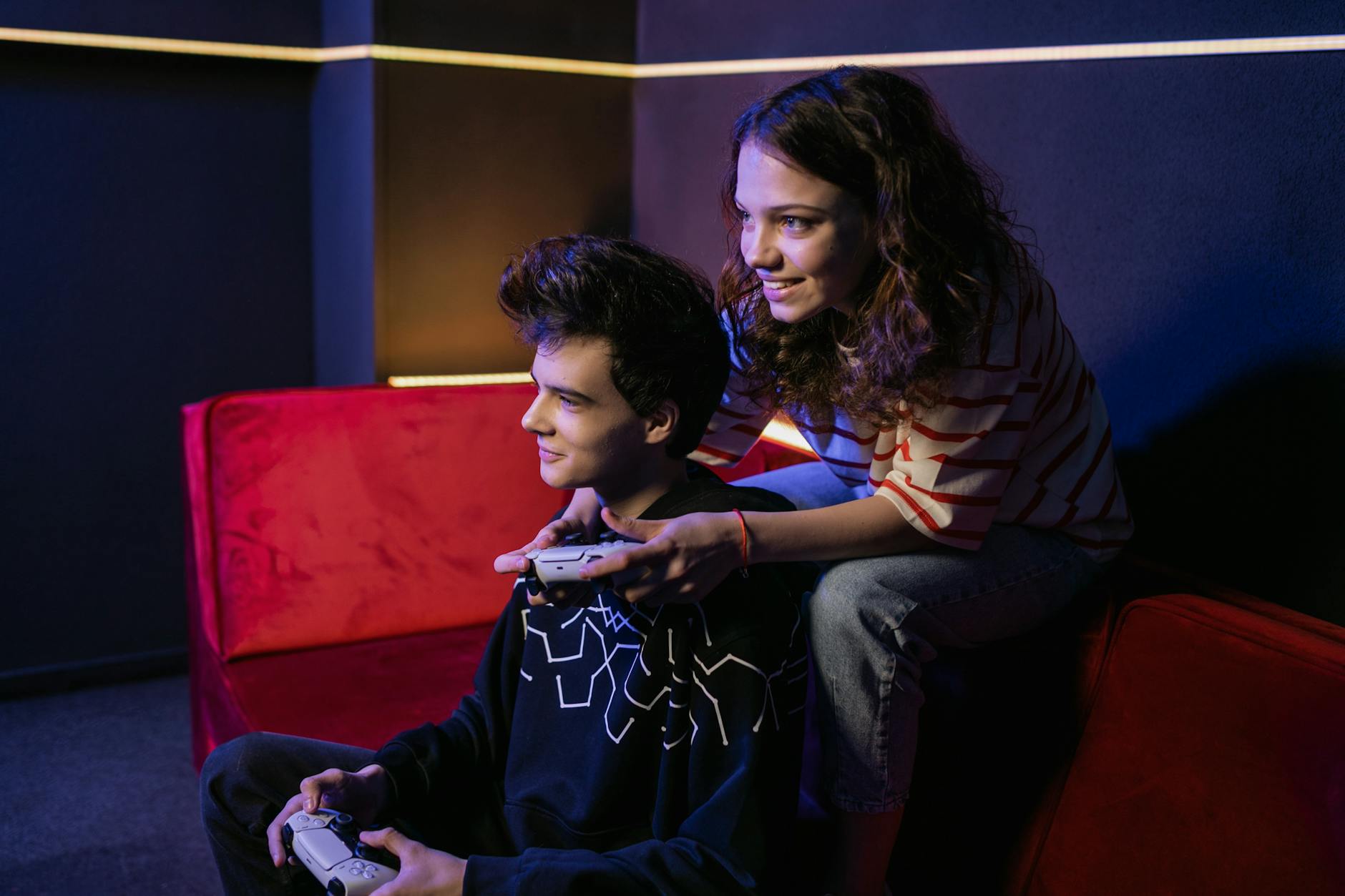
Cast your mind back to the era of split-screen. Not split-screen as a quirky throwback feature — split-screen as the way you played with other humans. GoldenEye 007 on the N64. Halo 2 in someone's living room. TimeSplitters 2 at a sleepover that technically ended at midnight but actually ended at 4am.
The beauty of couch co-op wasn't just convenience. It was proximity. You could physically shove the person who tea-bagged you. You could read their face when they realised you'd found the rocket launcher first. You could split a Domino's without anyone having to pause the game — though someone always paused the game to argue about toppings.
The social experience was tactile, immediate, and occasionally resulted in minor property damage. Peak gaming, honestly.
LAN Parties: When Multiplayer Got Ambitious (and Heavy)
For a certain generation, the next evolution wasn't wireless — it was wired, baby. The LAN party era asked a very important question: what if we took the couch co-op energy but made it significantly more logistically complicated?
Hauling a desktop tower across town in a wheelie suitcase. Arguing about IP addresses. Someone's ethernet cable being 30cm too short. The triumphant moment when everything connected and you could finally play Counter-Strike with eight people in someone's garage at 1am.
It was genuinely brilliant, and also completely unhinged. The LAN party demanded commitment. You didn't casually attend a LAN party. You prepared for it. You brought snacks, a power board, and the quiet knowledge that you were about to lose sleep for something that absolutely mattered.
The Internet Arrives and Changes Everything (Mostly for the Better)
Online multiplayer didn't kill local play overnight — it sort of... gently nudged it into a retirement community. Xbox Live on the original Xbox was arguably the moment the shift became irreversible. Suddenly, you didn't need your mates to be in the same postcode. You just needed them to have a broadband connection and a headset.
The upside was enormous. Friend groups that scattered to different cities could still raid together. You could find opponents at 3am when your household was sensibly asleep. Competitive scenes exploded. Games-as-a-service became viable. The entire esports industry quietly cleared its throat and entered the room.
The downside? That background hum of shared physical space disappeared. Nobody was nicking your chips anymore. Nobody was losing their mind on the sofa next to you when you pulled off something ridiculous. The reaction was now a voice in your ear — warm, but distant.
Cross-Platform: The Dream We Waited Too Long For
For years — an almost comically long stretch of years — the idea that a PlayStation player and an Xbox player might exist in the same game lobby was treated like cold fusion. Technically plausible. Practically impossible. Definitely not happening anytime soon because of business reasons that were never fully explained.
Then, slowly, it actually happened. Fortnite blew the doors open in 2018. Rocket League followed. Call of Duty made it mainstream. Now cross-platform play is less a feature and more a baseline expectation — and rightly so. The notion that your platform of choice should determine who you're allowed to play with always was, if we're being honest, a bit ridiculous.
Cross-play didn't just expand lobbies. It fundamentally reframed what a gaming friend group could look like. Your mate who's on PC, your cousin who's on PlayStation, your colleague who inexplicably still uses an Xbox One — all in the same squad, all equally able to let you down at the crucial moment. Beautiful.
Voice Chat Ecosystems: The New Living Room
Here's where it gets philosophically interesting. Discord, party chat, proximity voice in open-world games — the modern multiplayer experience has reconstructed something that resembles the old couch co-op vibe, just distributed across geography.
A busy Discord server with your regular gaming group has its own rhythms, its own in-jokes, its own version of the elbow-to-the-ribs when someone does something daft. People hang out in voice channels without even actively playing together, just... present. It's oddly wholesome. It's also, depending on your perspective, a reasonable facsimile of genuine togetherness or a slightly melancholy substitute for it.
Probably both, if we're being fair.
What We Actually Lost (No, Really)
Okay, cards on the table. For all the genuine, measurable improvement in how multiplayer gaming works in 2024, something real did get left behind.
The friction was part of the point. Arranging a LAN party was annoying and that annoyance created investment. Sharing a screen meant negotiating, compromising, tolerating your friend's inexplicable insistence on playing as the worst character. Physical co-op required everyone to be present — not just logged on, but actually there, in the room, accountable.
Modern multiplayer is frictionless by design, which means it's also easier to half-commit. To be technically in the party but spiritually somewhere else. The barrier to joining is so low that the barrier to leaving is equally minimal. Nobody's lugging a tower PC home at 3am anymore. The stakes, in a very specific and slightly silly way, were higher when the logistics were harder.
Split-screen has nearly vanished from major releases — a commercial decision dressed up as a technical one. Local co-op is a niche feature rather than a standard expectation. The sofa has been replaced by the server, and the server, for all its virtues, doesn't have the same smell.
The Verdict: Complicated Progress
Multiplayer gaming in 2024 is objectively more accessible, more connected, and more technically impressive than it has ever been. Cross-platform parties, seamless matchmaking, voice ecosystems that actually work — these are genuine achievements that have made gaming more social, not less.
But 'more social' and 'better social' aren't always the same thing. The best gaming memories most people carry aren't from a perfectly optimised ranked match. They're from a slightly too-dark room, a questionable controller, and someone yelling because they definitely, absolutely, one hundred percent was not screen-looking.
We've gained the world. We just occasionally miss the sofa.