Level Up Your CV: The Childhood Games That Accidentally Made Britain's Workforce
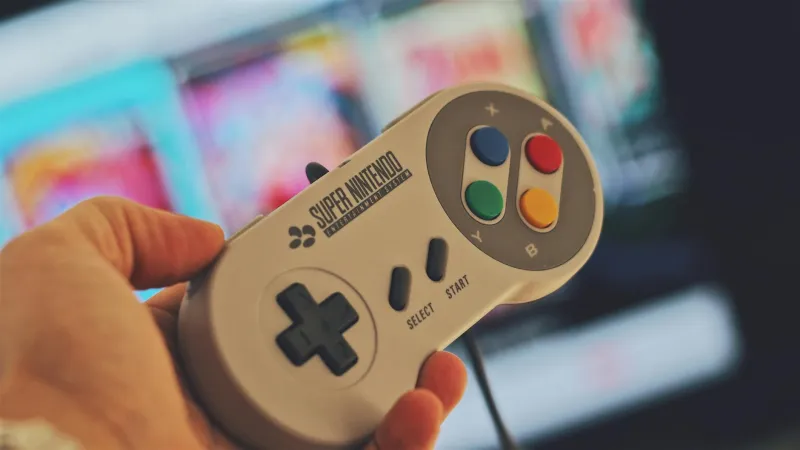
When Pixels Became Paycheques
Remember when your mum used to shout up the stairs that you were "wasting your life" on those computer games? Well, joke's on her — because while you thought you were just having a laugh with Crash Bandicoot or spending hours perfecting your RollerCoaster Tycoon empire, you were actually getting the best business education money couldn't buy.
Turns out, an entire generation of British workers can trace their professional skills directly back to the games they played as kids. And we're not talking about obvious connections like "I played FIFA so now I'm a footballer" — we're talking about proper, transferable skills that universities charge thousands for.
The Accidental MBA Programme
Take Sarah Mitchell, now a 34-year-old operations manager at a Manchester logistics firm. "I spent my entire childhood playing Theme Hospital," she tells us over a Teams call from her corner office. "I thought I was just trying to cure Bloaty Head syndrome, but I was actually learning resource allocation, staff management, and crisis response."
It's not just nostalgia talking. Sarah can point to specific moments where her gaming experience directly influenced her work decisions. "When we had a massive supply chain crisis during COVID, my first instinct was to reorganise the workflow exactly like I used to redesign hospital layouts when queues got too long. It worked."
She's not alone. Across Britain, thirty-something professionals are quietly crediting their childhood gaming habits for everything from financial literacy to project management skills.
The RollerCoaster Economy
James Chen, a financial advisor from Birmingham, reckons his understanding of market economics came entirely from RollerCoaster Tycoon. "I learnt about supply and demand when I was eight years old," he says. "Charge too much for your chips, and punters won't buy them. Price your rides too low, and you can't afford to maintain them. It's basic capitalism, but I was learning it through trial and error rather than textbooks."
The game taught him about cash flow, customer satisfaction, and even market research. "I'd spend ages watching where people walked, what they bought, how long they'd queue. That's literally what I do now, except instead of virtual theme park visitors, it's real clients and their investment portfolios."
Strategy Games = Strategic Thinking
Meanwhile, Emma Rodriguez credits her entire career in urban planning to hours spent with SimCity. Now working for Bristol City Council, she says the game taught her about infrastructure, zoning laws, and the delicate balance between development and sustainability.
"I learned that you can't just plop down residential areas without thinking about traffic flow, or build industrial zones next to schools," she explains. "The game punished you for poor planning with pollution, crime, and angry citizens. Sound familiar?"
What's particularly brilliant is how these games taught complex concepts through play rather than preaching. "No one sat me down with a PowerPoint about municipal budgets," Emma adds. "But when your virtual city went bankrupt because you overspent on fancy parks while neglecting basic services, you learned that lesson pretty quickly."
The Soft Skills Revolution
It's not just the obvious management and economics lessons, either. Plenty of Brits learned crucial soft skills through gaming without realising it.
Mark Thompson, now a senior developer at a London tech firm, traces his problem-solving methodology directly back to point-and-click adventure games. "Monkey Island, Day of the Tentacle, Sam & Max — these games taught me to think laterally, to try different combinations, to not give up when something seems impossible."
The persistence factor is huge. "Games taught us that failure isn't the end — it's just information," Mark continues. "You die, you respawn, you try again with new knowledge. That's exactly how I approach debugging code now."
The Patience Academy
Then there's the patience factor — something modern kids might struggle to understand. Loading screens, dial-up connections, and games that actually required you to read the manual taught an entire generation the value of delayed gratification.
"I spent literal hours waiting for games to load from cassette tapes," laughs Rachel Davies, a project manager from Cardiff. "That taught me patience in a way that no mindfulness app ever could. When clients get frustrated about project timelines now, I just think about waiting twenty minutes for Jet Set Willy to load, and suddenly three weeks doesn't seem so bad."
The Unintended Consequences
What's fascinating is how accidental it all was. These games weren't designed as educational tools — they were meant to be fun. But by making complex systems engaging and interactive, they ended up teaching skills that traditional education often struggles with.
"Schools taught me about the Roman Empire, but Theme Hospital taught me about resource management under pressure," Sarah reflects. "Both are valuable, but guess which one I use more often in my actual job?"
Loading Screen Legacy
As we watch today's kids grow up with instant gratification gaming and educational apps designed specifically to teach, there's something beautifully British about learning life skills through sheer bloody-mindedness and a refusal to admit you couldn't figure out that puzzle in Tomb Raider.
Perhaps the real lesson here isn't that games are educational — it's that the best education often happens when you're not trying to learn anything at all. Sometimes the most valuable skills are the ones you pick up while you're just trying to have a good time.
So next time someone moans about kids spending too much time gaming, maybe remind them that today's Minecraft architects might be tomorrow's urban planners. After all, if a generation of British workers can credit their success to a pixelated bandicoot and some dodgy hospital management, anything's possible.