Game Over? More Like Career Started: How British Bosses Finally Get Why Gaming Skills Matter
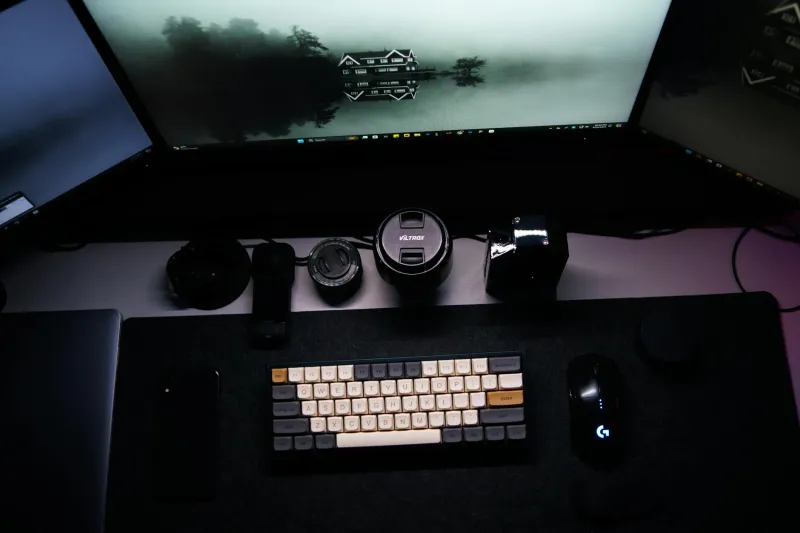
When 'Stop Playing Games' Becomes 'We Need Your Gaming Skills'
Remember when your mum used to shout upstairs that you were "rotting your brain" with those bloody video games? Well, turns out she might owe you an apology. Across Britain, a quiet revolution is taking place in boardrooms, classrooms, and career centres as employers finally cotton on to what gamers have known all along: those supposedly "wasted" hours building virtual worlds, managing digital economies, and coordinating online raids weren't preparation for unemployment — they were preparation for the future.
Take Sarah Mitchell from Coventry, who spent her teenage years obsessively building elaborate structures in Minecraft. Today, she's a senior architect at one of Birmingham's most prestigious firms, and she credits those pixelated building sessions with teaching her spatial reasoning, project management, and creative problem-solving. "My colleagues think I'm mental when I tell them Minecraft taught me more about structural engineering than my first year at uni," she laughs. "But it's absolutely true. I was calculating load-bearing walls and designing drainage systems when I was fourteen."
The Skills Gap That Gaming Quietly Filled
Sarah's story isn't unique. Across the UK, professionals are emerging from universities and apprenticeships with skill sets that seem tailor-made for modern workplaces — and many of them trace these abilities back to specific games that shaped their thinking during crucial developmental years.
Dr. James Whitfield, who runs the digital skills programme at Manchester Metropolitan University, has been tracking this phenomenon for the past five years. "We kept seeing students arrive with these incredibly sophisticated problem-solving abilities, particularly in areas like systems thinking, resource management, and collaborative leadership," he explains. "When we dug deeper, the common thread wasn't traditional education — it was gaming."
The numbers back up his observations. A recent study by the UK Digital Skills Council found that 73% of professionals under 30 in tech-adjacent roles had played strategy games regularly during their school years, compared to just 31% of their older colleagues. More tellingly, those with gaming backgrounds consistently outperformed in areas like project coordination, crisis management, and adaptive thinking.
From Virtual Economies to Real Spreadsheets
Perhaps nowhere is this more evident than in the financial sector, where a generation of analysts and traders are applying lessons learned from managing in-game economies. Tom Bradley, now a senior data analyst at a Leeds-based fintech startup, spent years playing EVE Online — a space-based MMO notorious for its complex economic systems and player-driven markets.
"People think EVE is just spaceships shooting each other, but it's actually one of the most sophisticated economic simulations ever created," Tom explains. "I was tracking market fluctuations, managing supply chains, and analysing risk-reward ratios across multiple currencies and commodities. When I started my finance degree, half the concepts were already second nature."
His employer, DataFlow Solutions, has become something of a pioneer in recognising gaming experience during recruitment. CEO Amanda Price admits she was initially sceptical when her HR team suggested asking candidates about their gaming backgrounds. "I thought they'd lost the plot," she says. "But the correlation between gaming experience and job performance became impossible to ignore. Now it's a standard part of our interview process."
Schools Finally Loading Up
This shift in perception is trickling down to education, where forward-thinking teachers and career advisors are beginning to help students articulate the transferable skills they're developing through gaming. At Eastwood Academy in Nottingham, career counsellor Lisa Thompson has developed a programme that helps students translate their gaming experiences into CV-friendly language.
"We had a lad who was convinced he had no skills because he'd spent most of secondary school playing World of Warcraft," Thompson recalls. "But when we broke it down, he'd been leading a 40-person guild, managing schedules across multiple time zones, mediating conflicts, and optimising team performance. Those aren't gaming skills — those are management skills."
The programme has been so successful that other schools across the Midlands are now implementing similar approaches. Students who once felt embarrassed about their gaming habits are learning to present them as evidence of dedication, strategic thinking, and technological literacy.
The Creative Industries Take Notice
Perhaps unsurprisingly, the creative industries were among the first to recognise the value of gaming experience. Animation studios, film production companies, and advertising agencies have long understood that someone who's spent years appreciating game design, narrative structure, and visual storytelling brings valuable perspectives to traditional creative work.
Rebecca Chen, creative director at a London-based animation studio, actively seeks out candidates with gaming backgrounds. "Gamers understand pacing, user experience, and interactive storytelling in ways that traditional media students sometimes struggle with," she explains. "They've internalised concepts about audience engagement and feedback loops that we spend months teaching others."
The Future Is Already Loading
As we move deeper into a digital-first economy, the skills that gaming naturally develops — adaptability, systems thinking, collaborative problem-solving, and comfort with technology — are becoming increasingly valuable across all sectors. The question isn't whether gaming experience is relevant to modern careers; it's why it took British employers so long to realise it.
For parents still worried about their children's screen time, perhaps it's worth considering that those hours spent building, strategising, and collaborating in virtual worlds might just be the best career preparation available. After all, in a world where the ability to navigate complex digital systems and work effectively in online teams is becoming essential, maybe the real question isn't "when will you stop playing games?" but "what games are you playing, and what are they teaching you?"
The loading screen for the UK's gaming-literate workforce has finished buffering. Game on.