Arcade Fever and Proper Queues: Inside Britain's Brilliant Retro Gaming Revival
The Sound of Nostalgia
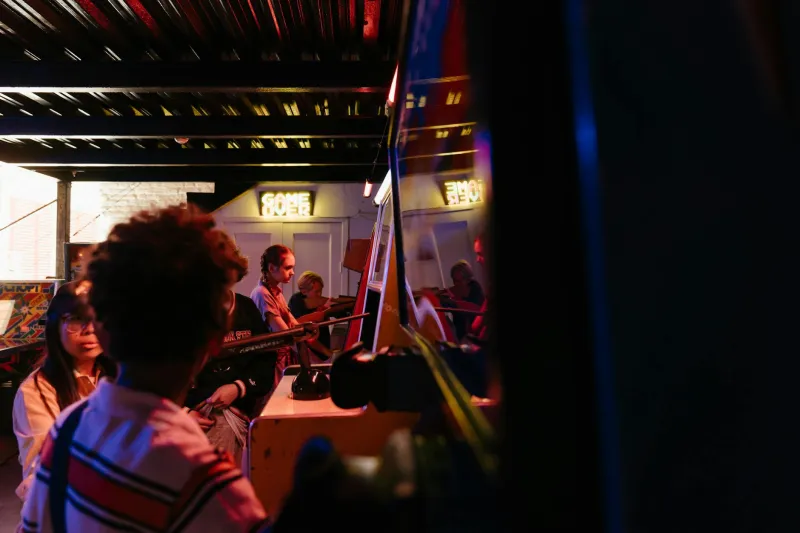
The first thing that hits you isn't the sight of the flashing screens or the crowds of punters clutching pint glasses—it's the sound. That distinctive electronic symphony of bleeps, bloops, and the satisfying thunk of joysticks being properly hammered. Welcome to Replay Events in Manchester, where a converted warehouse has become a time machine, and the queue to play Street Fighter II is longer than the one for the bar.
"Mate, I've been waiting twenty minutes to get destroyed by some teenager at Tekken 3," grins Dave Williams, a 42-year-old accountant from Stockport. "And I'm absolutely loving every second of it."
Dave's not alone. Across Britain, retro gaming events are selling out faster than you can say "insert coin." From the massive Play Expo in Blackpool to intimate gatherings in community centres, the appetite for gaming's golden age shows no signs of slowing down.
More Than Just Nostalgia
But here's the thing—it's not just middle-aged blokes reliving their youth. Walk around any retro gaming event and you'll spot families with kids who weren't even born when these games were cutting-edge, teenagers discovering the brutal difficulty of 1980s platformers for the first time, and pensioners who've become absolute demons at Pac-Man.
"The demographic is mental," says Lucy Harrison, who organises the Birmingham Retro Gaming Festival. "Last month, I watched a 67-year-old gran absolutely school a university student at Galaga. The kid was gobsmacked. She just smiled and said she'd been playing it since before he was born."
The numbers tell the story. Attendance at UK retro gaming events has grown by 340% over the past five years. The National Videogame Museum in Sheffield reports that 60% of its visitors are under 25. Even more telling, the average retro gaming event now runs for three days instead of one, and still sells out.
The Great British Queue Culture
There's something distinctly British about how we approach retro gaming events. While other countries might rush the machines or push to the front, we've somehow managed to apply our legendary queuing skills to arcade cabinets.
"It's brilliant, actually," observes Tom Chen, who runs the London Retro Gaming Meetup. "People naturally form queues, take turns, and genuinely cheer each other on. I've seen strangers bond over shared memories of spending their dinner money on Street Fighter moves they'd copied from magazines."
The social aspect can't be understated. In an age where gaming often means sitting alone with a headset, these events offer something increasingly rare: shared physical space and genuine human interaction.
"You can't rage-quit and storm off when there's a queue of people watching," laughs Sarah Mitchell, a regular at Cardiff's Pixel Party events. "Plus, when you do pull off something spectacular, the reaction is immediate and real. No online comments or emoji reactions—just proper cheers and high-fives."
The Economics of Nostalgia
The business side is equally fascinating. A single weekend at a major retro gaming event can generate over £50,000 for local economies. Hotels report increased bookings, restaurants see weekend spikes, and local pubs often extend their opening hours to cater to the influx of visitors.
"It's become a proper mini-industry," explains Mark Davies, whose company Retro Revival organises events across the North West. "We're not just hiring venues anymore—we're creating temporary communities. People plan their holidays around these events."
The pricing model is cleverly designed too. Most events charge a flat entry fee (typically £15-25) that includes unlimited play on all machines. It's the gaming equivalent of an all-you-can-eat buffet, and punters absolutely love it.
"Twenty quid for a full day of gaming? That's less than I'd spend on a couple of pints and a packet of crisps," says regular attendee James Murphy. "And I get to play games I haven't touched in decades."
Beyond the Arcade Cabinet
Modern retro gaming events have evolved far beyond simple arcade setups. The biggest gatherings now feature console museums, development talks, speedrunning competitions, and even live music from chiptune artists. Some events include "bring your own console" areas where visitors can hook up their personal collections.
"We had someone bring an original Vectrex last month," recalls event organiser Emma Thompson. "Within minutes, there was a crowd of people just marveling at it. Half of them had never seen vector graphics in person."
The educational element is increasingly important too. Many events now feature talks from original developers, preservation workshops, and sessions on gaming history. It's not uncommon to find university researchers documenting attendees' memories or collecting oral histories.
The Preservation Problem
Behind all the fun lies a more serious purpose: preservation. Many of these events serve as informal museums, keeping rare hardware and software alive for future generations.
"Every machine that breaks down is a piece of history potentially lost forever," explains restoration specialist Gary Pemberton. "These events create communities of people who know how to fix them, where to find parts, and why it matters."
The technical challenges are real. Original arcade boards fail, CRT monitors die, and replacement parts become increasingly scarce. Yet the community response has been remarkable, with attendees often volunteering their expertise to keep machines running.
Loading Up for the Future
As we look ahead, the retro gaming scene shows no signs of slowing down. If anything, it's becoming more sophisticated. Virtual reality experiences that recreate classic arcades are becoming common, while hybrid events blend retro gaming with modern indie titles.
"The line between 'retro' and 'contemporary' is getting blurred," notes gaming culture researcher Dr. Amanda Foster. "We're seeing modern games that deliberately evoke the 8-bit era, played alongside actual 8-bit games. It's fascinating."
Perhaps most importantly, these events are creating new gamers while celebrating old games. Children who discover the joy of co-op gaming on ancient machines often become the most passionate advocates for gaming culture.
"My eight-year-old daughter is now obsessed with Bubble Bobble," laughs attendee Rachel Green. "She keeps asking when we can go back to 'the place with all the old games.' I think we've created a monster."
In a world of digital downloads and cloud gaming, there's something wonderfully analog about Britain's retro gaming revival. It's loud, it's social, and it requires you to actually leave the house. In other words, it's exactly what gaming needs right now.